At American Home Pros of Arizona, we believe in being straight with our customers. So when something is happening in our industry that directly affects what you pay for HVAC equipment, we're going to tell you about it — even when it reflects poorly on the manufacturers we buy from.
Here's what's happening right now, and what it means for Arizona homeowners.
The Lawsuit: Seven Major Manufacturers Accused of Conspiring to Inflate Prices
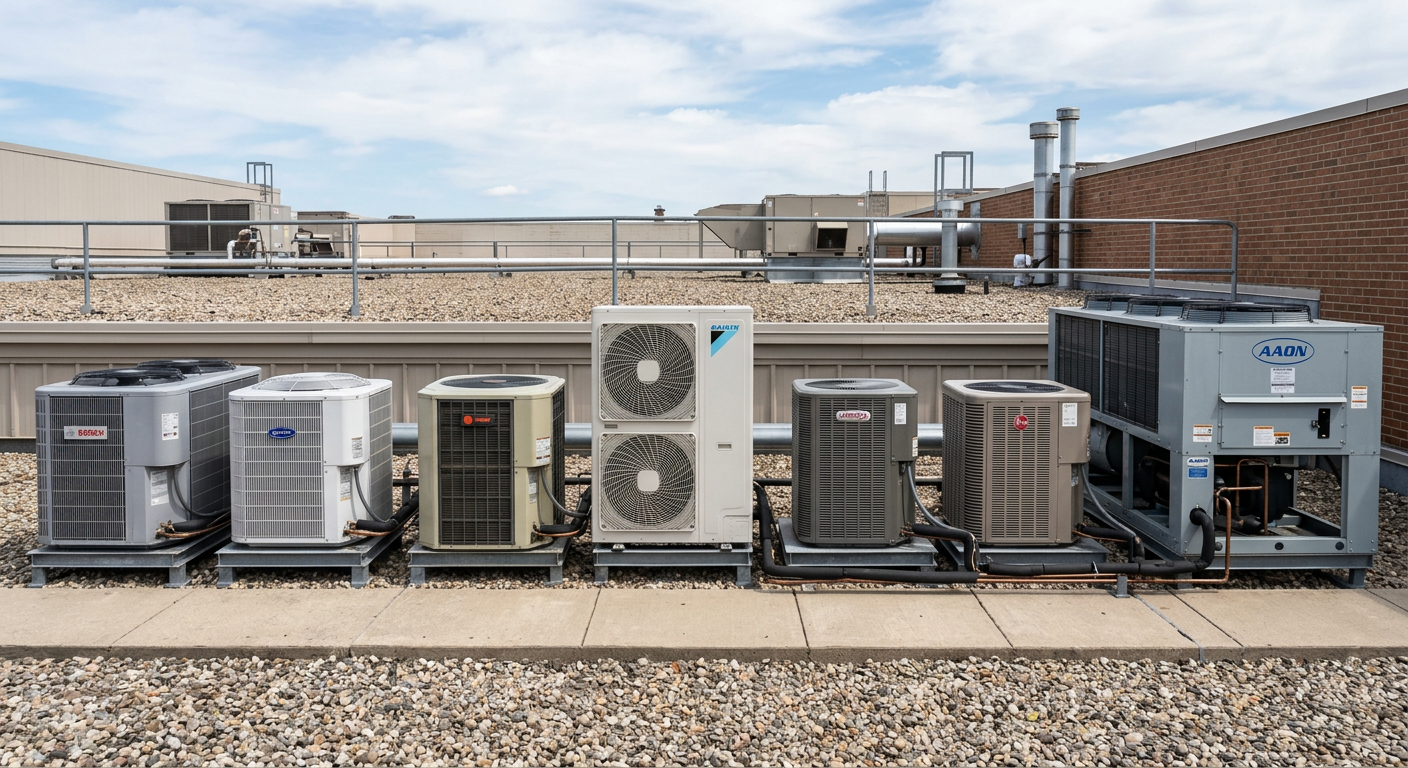
In March 2026, a Michigan consumer filed a federal class-action lawsuit against the seven largest HVAC manufacturers in the United States: Bosch, Carrier, Trane, Daikin, Lennox, Rheem, and AAON. Together, these companies and their subsidiaries control roughly 90% of the residential and commercial HVAC market in this country. Odds are very good that the system in your home was made by one of them.
The lawsuit, Berg v. Robert Bosch, LLC, et al., filed in the U.S. District Court for the Eastern District of Michigan, alleges that beginning in 2020 these manufacturers coordinated to raise and hold prices at levels that couldn't be justified by their actual costs. Attorneys for the plaintiff analyzed roughly 20 variables affecting HVAC production costs — copper, aluminum, steel, resin, plastic, compressors, labor, electricity rates, inflation, and others — and concluded that prices rose about 8% beyond what those real-world cost inputs would have justified.
The manufacturers have offered explanations for the increases: COVID-19 supply chain disruptions, updated federal efficiency standards, the AIM Act's phasedown of older refrigerants. The lawsuit argues these were cover stories, not causes. "These were pretextual justifications, unsupported by the actual data," lawyers for the plaintiff stated.
How the Alleged Conspiracy Worked
What makes this lawsuit notable isn't just the price increase allegation — it's the specific mechanism described.
According to the complaint, executives at these competing companies coordinated pricing through a combination of public statements, industry meetings, and a data-sharing application managed by AHRI, the Air-Conditioning, Heating, and Refrigeration Institute — the major trade organization for the HVAC manufacturing industry. AHRI's app, available only to member companies, allowed participants to share proprietary operational data with each other. The lawsuit alleges this became a vehicle for signaling pricing intentions rather than simply exchanging industry data.
Perhaps the most striking detail is the role played by ACHR News, a well-known HVAC industry trade publication. The lawsuit alleges the manufacturers used it almost exclusively to announce price increases to the market — not just for public relations purposes, but specifically to signal to each other when and how much they planned to raise prices, with other manufacturers quickly following suit each time. "Defendants used ACHR News not merely to announce price increases but to communicate with each other," the second lawsuit states.
The lawsuits document roughly 40 instances between 2020 and now in which the companies followed each other's pricing announcements in a pattern that, the plaintiffs argue, is inconsistent with how competitors in a genuinely open market behave.
A quote attributed to Lennox CFO Michael Quenzer at a July 2025 conference captures the concern in plain language. According to the second lawsuit, he said: "The next pricing level will be early next year when we all come out and announce our next full round of price increases. For the balance of the year, I think we're pretty well set from a price perspective. Next year, we'll do our annual price increase, and just like we always do, we expect similar results by others."
Then Came the Second Lawsuit
By May 2026, a second lawsuit had been filed — this one by Richard Isom, owner of Air Tech Services, an HVAC contracting company in Florida. This one seeks class-action status on behalf of contractors: the businesses that buy equipment wholesale from manufacturers and install it for homeowners. His lawsuit makes the same core allegation: the same seven manufacturers conspired to inflate prices starting in 2020, generating what it calls "unprecedented profit margins" at the expense of contractors and, through them, end consumers.
"That overcharge represents billions of dollars extracted from direct purchasers," the Isom lawsuit states.
Both Carrier and Trane have denied the allegations and say they will vigorously defend against the lawsuits. Bosch has declined to comment on pending litigation.
And Now They're Raising Prices Again
Here's the part that affects you directly and immediately — and that we want to be transparent about.
American Home Pros of Arizona has received notifications from several of these same manufacturers that they are raising prices on HVAC equipment beginning in August 2026.
Let that land for a moment. These are the same manufacturers currently being sued in federal court for allegedly conspiring to inflate prices since 2020 — and they are announcing another round of increases, effective this summer.
We're not in a position to tell you what's in the manufacturers' heads or whether the legal allegations will be proven in court. What we can tell you is what we're seeing on our end as a business that purchases and installs this equipment: prices on new systems are going up again, and the timing couldn't be worse for homeowners who are already dealing with higher costs across the board.
What This Means for Arizona Homeowners
Arizona is one of the most HVAC-dependent states in the country. A functioning air conditioner here isn't a comfort item — in summer, it's a health necessity. Price increases on new systems hit Arizona homeowners harder than almost anywhere else, because the alternative (going without) simply isn't viable when temperatures exceed 110°F.
Here's our honest take:
If your system is aging but functional, repair may make more and more sense relative to replacement as equipment prices rise. We've always believed in recommending repair when repair is the right answer. That philosophy is even more relevant when the cost of a new system is being pushed upward by forces that have nothing to do with what the equipment is worth.
If you've been putting off a replacement for a system that genuinely needs it, acting before August may save you money. The price increases take effect on new equipment orders beginning in August 2026. If your system is on borrowed time and you've been thinking about replacing it, there is a real window right now to do so before the next round of increases hits.
We will always tell you which option makes more sense for your specific situation. Not which option is more profitable for us. Our technicians are hourly employees, not commission-based salespeople — so their recommendation is based on what your system actually needs, not what generates the biggest ticket.
The Bigger Picture
This isn't just a story about a lawsuit. It's a story about market structure. When seven companies control 90% of the HVAC equipment sold in the United States, homeowners have very limited ability to simply "shop around" for a better price on a system. The brands change, but the underlying pricing power doesn't. That's precisely the concern antitrust law is designed to address — and precisely why two separate class-action lawsuits are now making their way through federal court.
We're watching this closely, the same way we've been watching the EPA refrigerant rule challenge we wrote about recently. Both stories point to the same underlying reality: the cost of keeping Arizona homes cool is being shaped by decisions made far above the contractor level — in corporate boardrooms, trade association meetings, and federal agencies. We think our customers deserve to know that, even when it's uncomfortable.
As always, if you have questions about your system, what a repair or replacement would realistically cost, or how to think about the timing of any major decision, we're here to give you a straight answer.
Frequently Asked Questions
- Which manufacturers are named in the lawsuits?
- The seven defendants are Bosch (which acquired Johnson Controls' residential HVAC business in 2024), Carrier, Trane, Daikin, Lennox, Rheem, and AAON. Together with their subsidiaries, they control roughly 90% of the U.S. residential and commercial HVAC market.
- Have the manufacturers been found guilty of anything?
- No. These are civil lawsuits seeking class-action status, and both are still in early stages. Carrier and Trane have publicly denied the allegations and say they will fight them. No court has made any finding of wrongdoing. The allegations are serious and well-documented, but they remain allegations at this stage.
- If prices are going up, is now the right time to replace my system?
- It depends entirely on the condition of your current system. If it's functioning well and doesn't have a chronic leak or major mechanical issue, repairing it and extending its life continues to make sense — even more so when new equipment costs are rising. If your system is aging, frequently breaking down, or has been losing refrigerant repeatedly, replacing it before August 2026 could save you meaningful money on the equipment itself. Call us and we'll give you an honest assessment.
- How much are prices going up in August?
- The specific percentage varies by manufacturer and product line, and we're still receiving final notifications. As those details become clearer, we'll update our customers. What we can say is that these are not minor adjustments — they follow a pattern of repeated increases that the lawsuits allege has added up to roughly 8% above what real cost inputs would justify since 2020.
- Does this affect repair parts, or only new systems?
- The August increases we've been notified about primarily relate to new equipment — complete systems and major components. Repair parts pricing is a separate matter and varies by part and manufacturer. A system repair that avoids replacing the whole unit remains one of the best ways to sidestep the impact of new equipment price increases.
- What can homeowners do about this?
- In the short term: get your system inspected now so you know where it stands before any decisions are forced on you by a breakdown in peak heat. If you're already considering replacement, do it before August. In the longer term: the class-action lawsuits, if successful, could result in refunds or settlements for consumers who purchased HVAC equipment between 2020 and now. You don't need to do anything to potentially benefit — class actions cover all eligible consumers automatically if a settlement is reached.
- Is American Home Pros of Arizona raising its prices because of this?
- Our labor rates and service call pricing are set based on our own costs and what it takes to pay our technicians well and run an honest business. We don't pass along manufacturer price increases on equipment until those costs are actually real on our end. We'll always be upfront with you about what something costs and why.
Thinking about repair vs. replacement before the August price increases? Get an honest assessment. Call (602) 428-7027.
(602) 428-7027Sources
- HVAC Manufacturers Sued for Conspiring to Inflate Prices — Facilities Dive, March 30, 2026
- HVAC Manufacturers Face Second Suit Over Price-Fixing Allegation — Facilities Dive, May 7, 2026
- Berg v. Robert Bosch, LLC, et al. — Original Class Action Complaint (Eastern District of Michigan)
- Isom v. Bosch et al. — Second Class Action Complaint (Eastern District of Michigan)
— American Home Pros of Arizona