
If you've been told your sewer line needs to be dug up and replaced, you may have options that don't involve a backhoe in your yard, a destroyed driveway, or a five-figure excavation bill. Cured-in-place pipe (CIPP) lining is a trenchless method that rehabilitates your damaged pipe from the inside — no trenching, no destruction of landscaping or hardscape, and in most cases, the entire job is done in a single day.
We start every CIPP assessment with a camera inspection so you can see exactly what's wrong before any work begins. If lining is the right solution, we'll tell you why, show you the footage, and give you upfront flat-rate pricing. If the pipe's condition makes lining the wrong call, we'll tell you that too.
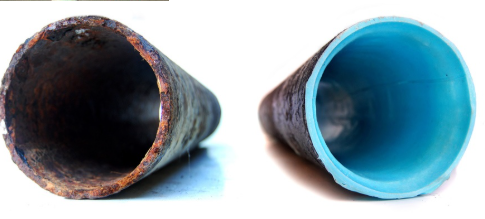
What Is CIPP Pipe Lining?
CIPP stands for Cured-In-Place Pipe. It's a trenchless pipeline rehabilitation method that creates a structurally independent new pipe inside your existing damaged one — without removing or replacing the original pipe.
Here's how the process works:
- 1
Camera inspection
Before anything else, we run a high-definition sewer camera through your line to assess the type and extent of damage. This tells us whether CIPP lining is appropriate for your specific situation — not every pipe is a candidate, and we won't recommend it when it isn't.
- 2
Pipe preparation
We clean the pipe thoroughly — typically with hydro jetting — to remove scale, grease, root debris, and any material that would prevent the liner from bonding correctly. The pipe interior needs to be clean for the liner to adhere properly and perform for its rated lifespan.
- 3
Liner insertion
A flexible felt liner saturated with epoxy resin is inserted into the damaged pipe through a small access point — typically a cleanout, an access excavation, or an existing opening. The liner is pulled or pushed into position covering the full repair length.
- 4
Curing
The liner is inflated with compressed air or water, pressing it against the pipe walls. It's then cured using heat (steam or hot water) or UV light, hardening the resin into a smooth, jointless new pipe inside the old one. Curing typically takes one to several hours depending on pipe diameter, liner length, and curing method.
- 5
Final camera inspection
Once the liner is cured, we run the camera again to confirm the liner has bonded correctly, the pipe is fully sealed, and flow is restored. You see the finished result on video before we close up the job.
The finished liner is jointless, corrosion-resistant, root-resistant, and smooth — eliminating the most common failure points in older pipe. A properly installed CIPP liner has an expected service life of 50 years or more, based on manufacturer specifications and third-party testing under ASTM F1216. We back every CIPP installation with our 5-year workmanship guarantee in addition to the 50-year product warranty on the liner itself.
Why CIPP Lining Matters More in Arizona Than Almost Anywhere Else
Most CIPP explanations stop at "no digging." In Arizona, the reasons to avoid digging go further than most homeowners realize.
Caliche soil
The Phoenix Valley sits on caliche — a naturally occurring hardened calcium carbonate layer that can be inches to feet thick depending on location. Breaking through caliche for traditional excavation requires heavy equipment, extended labor, and significantly more cost than digging in softer soil. Because trenchless methods use small access points, they drastically minimize the amount of dense caliche that needs to be excavated — directly reducing labor and heavy machinery costs associated with breaking through hardened ground. For many East Valley homeowners, caliche alone makes the cost differential between CIPP and traditional excavation substantial.
Arizona soil movement
Arizona's extreme temperature swings and wet/dry cycles — particularly the transition from dry spring conditions to monsoon season — cause soil to expand and contract more than in most U.S. climates. As the soil dries and shrinks, it leaves small air pockets that cause pipes to lose support and sag — these low spots collect water and debris, leading to slow drainage and persistent clogs. Traditional clay and cast-iron pipe joints are vulnerable to these shifts; a CIPP liner creates a continuous, flexible, jointless pipe that is structurally better suited to Arizona's shifting soil conditions than the segmented original pipe.
Tree root intrusion
Traditional sewer lines rely on multiple joints to connect pipe sections — every joint is a weak point, providing an entry opportunity for tree roots. CIPP creates a continuous, jointless pipe wall that is completely smooth, inhibiting root growth and preventing root penetration — one of the most common causes of recurring sewer backups in established East Valley neighborhoods.
Older pipe materials
Homes built in the Valley between the 1950s and 1990s frequently have original clay or cast-iron sewer lines. Both materials are prone to cracking, corrosion, and joint failure after 40 to 70 years in service. In Sun City, older Florence neighborhoods, historic Mesa communities, and pre-2000 Chandler and Gilbert subdivisions, we regularly find sewer lines in exactly the condition CIPP is designed for — structurally compromised but not fully collapsed.
Sun City is the single most common CIPP market in our territory. Every home there was built between 1960 and 1978, and original cast-iron laterals are the norm — 47 to 65 years of scale buildup, interior corrosion, and joint separation. Lining the existing pipe from the inside means no excavation through decades-old desert landscaping, patios, or driveways. We camera the line first, every time, so you see the actual pipe condition before any recommendation.
Mesa is close behind. Dobson Ranch — built through the 1970s and early 1980s — and central and West Mesa's 1950s and 1960s historic core both have original cast-iron sewer laterals that are now 45 to 70 years old. Those neighborhoods also have mature landscaping, lakes, and established hardscape that homeowners have no interest in trenching through, which makes CIPP the right call in most cases. Val Vista Lakes and other pre-2000 Gilbert subdivisions run the same profile.
In Chandler, Sun Lakes is the clearest CIPP market — an active adult community built from the late 1970s through the 1990s, with sewer laterals that are now 30 to 45 years old and mature landscaping and golf-course frontage nobody wants trenched. North Chandler's 1970s through 1990s neighborhoods north of Loop 202 run a similar profile, and Ocotillo's lakeside lots are another case where lining beats excavation outright.
In Phoenix, Arcadia and North Central Phoenix are primary CIPP markets alongside Sun City, Dobson Ranch, Val Vista Lakes, and Sun Lakes. Arcadia's 1950s and 1960s ranch homes sit on original clay sewer laterals that are now 60+ years old, under mature citrus, turf, and hardscape nobody wants trenched. North Central Phoenix and the central Phoenix corridor — Uptown, Encanto, and Midtown — run the same profile with original cast-iron laterals. Lining rehabilitates the pipe from the inside and leaves the landscaping intact.
In Scottsdale, McCormick Ranch and central Scottsdale are primary CIPP markets alongside Dobson Ranch, Sun City, and Arcadia. McCormick Ranch's 1970s and 1980s construction sits under mature greenbelt landscaping, lakes, and golf frontage that homeowners protect — the same is true of Scottsdale Ranch and Gainey Ranch. Trenchless lining rehabilitates aging laterals without trenching decades-old trees and hardscape.
In Tempe, The Lakes is a primary CIPP market alongside Dobson Ranch, Sun City, Arcadia, and McCormick Ranch. The Lakes' 1970s cast-iron and clay laterals are 45–50 years old and sit under lakeside landscaping and mature trees that would be expensive to restore after excavation — trenchless lining rehabilitates the pipe without opening the yard. Central Tempe and the Downtown/Maple-Ash neighborhoods run the same mid-century profile.
CIPP Lining vs. Traditional Excavation vs. Pipe Bursting
Understanding which method is right for your situation requires a camera inspection — there's no way to know without looking inside the pipe first. Here's how the three approaches compare:
CIPP Lining (what this page covers)
- Best for: cracked, corroded, root-damaged, or leaking pipes that retain their basic shape
- How it works: new liner installed inside the existing pipe
- Excavation needed: minimal — typically one small access point, sometimes none beyond the existing cleanout
- Result: a smooth, jointless new pipe inside the old one
- Lifespan: 50+ years
- Cost advantage: typically 30 to 50% less expensive than traditional replacement when you factor in excavation, landscape restoration, and labor costs
- Not appropriate for: fully collapsed pipes, severe pipe bellying affecting drainage slope, or pipes with large sections of missing material
Pipe Bursting
- Best for: pipes that are too deteriorated for lining but whose path through the soil is still intact
- How it works: a bursting head breaks the old pipe apart while simultaneously pulling a new pipe into place
- Excavation needed: two small access points — one at each end of the repair length
- Result: a brand-new pipe (typically HDPE) replacing the old one
- Lifespan: 50+ years
- When we recommend it: when the pipe is too damaged to provide a bonding surface for CIPP liner, but the line doesn't need to be rerouted
Traditional Excavation
- Best for: pipes that have fully collapsed, need significant rerouting, or where access point installation for trenchless methods isn't feasible
- How it works: dig a trench the full length of the repair, remove and replace pipe
- Excavation needed: full trench — landscaping, concrete, driveways, flooring affected
- Cost: significantly higher when restoration costs are included
- When we recommend it: when neither CIPP nor pipe bursting is a viable option for the specific pipe condition
We'll tell you honestly which method fits your situation after the camera inspection — including when excavation is genuinely the right call, not just the default.
What CIPP Can Fix
CIPP lining is appropriate for a wide range of pipe damage in residential sewer lines:
- Cracks and fractures — hairline to moderate cracks from soil movement, root pressure, or age
- Corrosion — oxidized cast iron and degraded clay pipe interiors that are roughening and losing flow capacity
- Root intrusion — roots that have entered joints or cracks; the liner seals the entry points and prevents re-entry
- Joint separation — gaps at pipe connections caused by soil shifting or original installation settling
- Minor pipe bellying — slight sags that affect drainage if flow capacity can be restored by the liner
- Leaking lateral connections — connections to the main that are allowing groundwater intrusion or sewage exfiltration
What CIPP cannot fix:
- Fully collapsed pipe sections (no structural support for the liner to bond to)
- Severe bellying where the drainage slope is compromised regardless of liner
- Pipes with missing material (holes, not cracks)
- Pipes that have been crushed or offset by more than the liner can span
This is exactly why the camera inspection comes first — every time, no exceptions.
Who Needs CIPP Lining in the Phoenix Valley
Older homes in established neighborhoods
Homes in Sun City, Mesa's mid-century subdivisions, older Chandler neighborhoods, Tempe, and historic Scottsdale areas frequently have original clay or cast-iron sewer lines dating to the 1950s through 1980s. These lines are now 40 to 70 years old and approaching or past the end of their designed service life. If you're having recurring drain backups, slow flow throughout the house, or a sewage smell in the yard, a camera inspection is the first step.
Val Vista Lakes and 1980s Gilbert
Val Vista Lakes in Gilbert was built through the late 1980s and 1990s, so original sewer laterals there are now 35 to 40+ years old. The lakeside setting makes excavation especially costly — mature trees, established landscaping, and irrigation systems often cost more to restore than the pipe repair itself. Lining the existing line from a single access point avoids all of it.
Peoria's active-adult communities — Westbrook Village and Ventana Lakes
Westbrook Village and Ventana Lakes in Peoria were built between the mid-1980s and 1995, which puts their original sewer laterals at 30 to 40 years old today. Both communities are built around golf courses and lakes with decades of established landscaping, so open-trench replacement means tearing out mature trees, turf, and irrigation that homeowners have maintained for years. Trenchless lining restores the line from a single access point and leaves the yard intact.
Homes with mature trees
Large trees — particularly those with aggressive root systems like ficus, eucalyptus, citrus, and block-wall shrubs common in the Valley — seek out moisture along sewer lines. Root intrusion is one of the most common causes of recurring sewer backups in established East Valley neighborhoods. CIPP lining seals the entry points and creates a root-resistant surface that won't be re-penetrated.
Pre-purchase sewer inspections
A sewer camera inspection before buying a home — particularly any home built before 1990 — is one of the most valuable inspections a buyer can add. A failed sewer line can cost $5,000 to $20,000+ to repair or replace, and it's not visible during a standard home inspection. If the camera reveals pipe condition that warrants lining, knowing before closing gives you negotiating leverage and time to plan.
Post-monsoon sewer issues
Arizona's monsoon season (mid-July through September) significantly stresses sewer systems — soil movement from rain saturation, increased root activity from moisture, and surge in condensate volume from HVAC systems all concentrate in a 60-day window. If your drains slow down or back up during or after monsoon season, a camera inspection can determine whether the cause is a one-time clog or structural pipe damage.
The Process — What to Expect
Day of assessment
We arrive, run the camera, show you the footage in real time, and give you our honest assessment of what we found and what we recommend. If lining is appropriate, you get upfront flat-rate pricing on the spot. No pressure, no obligation to proceed.
Day of installation (most residential CIPP jobs)
- Pipe preparation (hydro jetting to clean the interior) — 1 to 2 hours
- Liner preparation and insertion — 1 to 2 hours
- Curing — 1 to 4 hours depending on method, pipe diameter, and liner length
- Final camera inspection — 30 minutes
- Total: most residential CIPP jobs are complete in a single day
Water service is typically restored the same day. In most cases, landscaping is undisturbed and driveways are intact.
After installation
We provide documentation of the pre- and post-lining camera footage, the liner specifications and manufacturer warranty, and our 5-year workmanship guarantee. The pipe is back in service, structurally independent of the old pipe, and rated for 50+ years of service life.
Cost of CIPP Lining in Arizona
We won't quote a per-foot price range on this page because the variables that affect CIPP cost are significant — pipe diameter, liner length, access point requirements, pipe preparation needed, and the condition of the specific pipe all matter. On average, CIPP lining costs between $80 and $250 per foot depending on pipe diameter, length, and job complexity. For a typical residential sewer line repair, total cost ranges from $3,000 to $5,000 for small-scale work and $4,000 to $20,000 for more extensive repairs.
What we will say: for most residential sewer lines, CIPP lining costs significantly less than traditional excavation once you factor in what excavation actually costs in the Phoenix Valley — caliche breaking, landscape restoration, driveway or concrete repair, and extended labor. CIPP pipe lining is typically 30 to 50% less expensive than traditional replacement for comparable residential sewer lines when total project cost is compared.
We provide upfront flat-rate pricing after the camera inspection — you know the full cost before any work begins.
Service Area
Same-day CIPP assessment and trenchless pipe lining across our full service territory:
- Queen Creek
- San Tan Valley
- Gilbert
- Chandler
- Mesa
- Tempe
- Scottsdale
- Phoenix
- Anthem
- New River
- Florence
- Apache Junction
- Gold Canyon
- Surprise
- Sun City
Older neighborhoods with pre-1990 sewer infrastructure — Sun City, Mesa's mid-century areas, historic Tempe, older Chandler and Gilbert subdivisions, Florence's historic core, and Apache Junction — are the areas where we most commonly find sewer lines that benefit from CIPP lining.
Frequently Asked Questions
What does CIPP stand for?
Cured-In-Place Pipe. It describes both the process (liner cured inside the existing pipe) and the result (a new pipe formed in place within the old one). You'll also see it called trenchless pipe lining, epoxy pipe lining, pipe relining, or sewer lining — these terms refer to the same general technology, though there are variations in liner material and curing method.
How long does CIPP lining last?
A properly installed CIPP liner has an expected service life of 50 years or more, based on manufacturer specifications and third-party testing under ASTM F1216. The liner is jointless, corrosion-resistant, and root-resistant — it eliminates the failure points (joints, corroded surfaces) that caused the original pipe to fail.
Does CIPP lining require digging?
Minimal to none in most residential cases. We typically need one access point — either the existing cleanout, a small excavation at one end of the repair, or an existing opening. The pipe itself is not excavated. Your landscaping, driveway, and concrete stay intact in the vast majority of residential jobs.
Is CIPP lining appropriate for my home?
A camera inspection is the only way to know. CIPP works on pipes that are cracked, corroded, or root-damaged but retain their basic shape. It's not appropriate for fully collapsed pipes, pipes with severe bellying, or pipes with large sections of missing material. We'll tell you honestly after the camera whether lining is right for your pipe.
What pipe materials can be lined?
CIPP lining works on clay, cast iron, concrete, ABS, and PVC pipes. It's particularly well-suited to the clay and cast-iron lines common in older Phoenix Valley homes, where corrosion and joint failure are the typical failure modes.
How long does the job take?
Most residential CIPP jobs are complete in a single day — camera inspection, pipe cleaning, liner installation, curing, and final camera inspection. Water service is typically restored the same day.
What's the difference between CIPP and pipe bursting?
CIPP rehabilitates the inside of your existing pipe — the old pipe stays in the ground and the liner forms a new pipe inside it. Pipe bursting replaces the old pipe entirely by fracturing it with a bursting head while simultaneously pulling new pipe into place. CIPP is for pipes that are damaged but retain their shape; pipe bursting is for pipes too deteriorated to provide a bonding surface for a liner. Both are trenchless; both require minimal excavation compared to traditional dig-and-replace.
Can CIPP lining be done under a concrete slab?
Yes — and this is one of CIPP's most significant advantages for homes with slab foundations. Traditional repair of an under-slab sewer line requires breaking through the concrete floor, excavating below the slab, replacing the pipe, and restoring the concrete — a highly disruptive and expensive process. CIPP lining can often rehabilitate an under-slab pipe with only a small access opening, leaving the slab intact.
Do you do the camera inspection first?
Always. We won't recommend CIPP — or any pipe repair method — without a camera inspection. The camera tells us the type and extent of damage, whether lining is appropriate, and exactly what needs to be done. You see the footage before we quote anything.
What about root intrusion — will the roots come back after lining?
No. The CIPP liner creates a smooth, jointless, seamless pipe surface with no entry points for roots. Roots won't re-penetrate a properly installed liner. If roots were accessing the pipe through joints or cracks, those entry points are sealed permanently.
Does CIPP lining affect flow capacity?
Slightly — the liner adds a small amount of wall thickness inside the existing pipe, reducing the interior diameter by approximately 6–8% on a typical residential line. In practice, the smoother interior surface of the cured liner actually improves flow compared to the corroded, roughened interior of the damaged original pipe, and the minor diameter reduction does not affect drain performance in residential applications.
What warranty do you provide?
Two warranties apply to every CIPP installation we perform: a 50-year manufacturer warranty on the liner product itself (ASTM F1216 rated) and our 5-year workmanship guarantee on the installation work. Both are documented and provided at job completion.
Sewer issue that might need lining?
Call us at (602) 428-7027 or book online. We start with a camera inspection so you know exactly what's happening before we recommend anything — same-day assessment across the East Valley and Phoenix metro.
See our full Drain Cleaning & Sewer Services