If you've had your air conditioner serviced in the last couple of years, you may have noticed that refrigerant isn't cheap. There's a reason for that, and it's about to get more complicated. Here's what's happening at the regulatory level, why it matters for Arizona homeowners, and what we're watching at American Home Pros of Arizona.
A Quick Backstory on Refrigerant Regulations
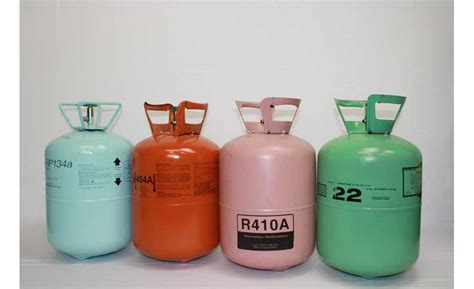
In 2020, Congress passed the American Innovation and Manufacturing (AIM) Act, which set in motion a gradual phasedown of HFC refrigerants — the class of refrigerants that includes R-410A, one of the most common refrigerants used in residential AC systems across the country. The logic behind the phasedown is environmental: HFCs are potent greenhouse gases, and the goal is to push the industry toward newer, lower-impact alternatives.
As part of that law, the EPA was given authority to set deadlines for when certain types of HVAC equipment could no longer be manufactured, imported, or installed using the older refrigerants. One of those deadlines was January 1, 2026 — after which most new R-410A residential systems were supposed to be off the table.
What the EPA Just Did
In late May 2026, the EPA finalized a rule that made two significant changes:
First, the good news: it removed the January 1, 2026 installation deadline for R-410A systems. That means existing R-410A inventory — equipment that was already manufactured and sitting in warehouses and distributor shelves — can still be installed in homes. That flexibility matters for homeowners and contractors alike who had R-410A equipment already in the pipeline.
Second, the part the industry is pushing back on: the same rule extended until 2032 the deadline for certain commercial refrigeration equipment to transition away from older, high-GWP (global warming potential) refrigerants. In plain terms, it allows new commercial refrigeration systems — think large grocery store refrigeration units and similar commercial equipment — to continue being built using legacy refrigerants for several more years.
Why That Second Part Is a Problem
Here's where it gets important for homeowners: the AIM Act's phasedown of HFC refrigerant supply continues regardless of what the EPA does with equipment deadlines. The amount of refrigerant allowed into the market keeps declining on a set schedule. That supply reduction doesn't pause because the EPA extended a commercial equipment deadline.
So what happens when you keep reducing supply while simultaneously allowing new commercial systems to be built that depend on the same refrigerants? Demand goes up on one end while supply keeps going down on the other. Basic economics: prices rise.
The Heating, Air-conditioning & Refrigeration Distributors International (HARDI), one of the major HVAC industry associations, put it directly: by allowing new commercial refrigeration systems to be built on legacy refrigerants, the rule artificially inflates demand and squeezes the entire market, including the residential AC segment.
In other words, a commercial refrigeration policy decision has a direct impact on what homeowners pay when their residential AC system needs a refrigerant recharge.
The EPA's own analysis projects that U.S. refrigerant prices could rise between 12 and 24 percent by 2029 as a result of the rule in its current form.
The Legal Challenge
On June 26, 2026, three major HVAC industry associations — ACCA (Air Conditioning Contractors of America), HARDI, and PHCC (Plumbing-Heating-Cooling Contractors Association) — filed a legal challenge in the U.S. Court of Appeals for the D.C. Circuit, seeking to have the problematic parts of the rule vacated.
Their petition rests on two arguments:
The first is a procedural one. The AIM Act includes a one-year waiting period before deadline changes can take effect. The EPA's rule had a 60-day effective date, which the associations argue conflicts directly with what the law actually says.
The second argument is that the EPA's analysis was arbitrary and incomplete. The agency never clearly explained how it weighed the factors the AIM Act requires it to consider, or why a delay as long as 2032 is justified for commercial refrigeration technologies the EPA itself had already determined were acceptable alternatives.
Other parties have until July 27, 2026 to file their own petitions. After that, a briefing schedule will be set for written arguments, followed by oral arguments. Based on a previous legal challenge HARDI brought against the EPA, the timeline from petition to decision ran about 19 months — so this is not a quick fix, but it is the right process for challenging a rule that could drive up costs across the board.
Why This Matters for Arizona Homeowners Specifically
Arizona is one of the most refrigerant-dependent states in the country. When temperatures regularly hit 110°F or higher, air conditioning isn't optional, and a system that's low on refrigerant isn't just uncomfortable — it can be a health and safety issue within hours. Refrigerant costs that rise 12 to 24 percent aren't an abstract policy number here. They show up directly in service call invoices.
Beyond the price question, there's a longer-term concern the industry associations have flagged: if the rule in its current form stands, the tighter supply and higher prices could accelerate a full market transition to A3 refrigerants, which include propane-based options. That transition carries its own challenges around handling, safety training, and equipment compatibility. It's a transition the industry believes could have been managed on a more reasonable timeline under the prior rules — and that the legal challenge is partly aimed at avoiding being forced into prematurely.
What We're Watching at American Home Pros of Arizona
We're tracking this closely because it directly affects what we're able to offer our customers and at what cost. We'll continue to be transparent with our customers about refrigerant pricing as this situation develops, the same way we approach everything else in our business.
If your system is low on refrigerant, has a known leak, or is getting older and running less efficiently, it's worth having a conversation sooner rather than later about your options. We'll give you an honest assessment — and if a repair makes more sense than a replacement, that's what we'll tell you.
— American Home Pros of Arizona
Frequently Asked Questions
- What is refrigerant and why does my AC need it?
- Refrigerant is the chemical that makes cooling possible. It cycles through your AC system, absorbing heat from inside your home and releasing it outside. When a system is low on refrigerant — usually because of a leak — it can't cool effectively, runs harder than it should, and eventually stops cooling altogether. Without a proper refrigerant charge, your AC is just moving air.
- What refrigerant does my current AC system use?
- Most residential systems installed before 2023 use R-410A. Systems installed from 2023 onward were required to transition to R-454B or other lower-GWP alternatives. If you're not sure what your system uses, it's printed on a label on the outdoor unit. Your technician can also tell you during any service call.
- Will my existing AC system become illegal or unsupported?
- No. If you already own an R-410A system, you can continue using it, repairing it, and recharging it with R-410A refrigerant. The regulations being discussed affect the manufacture and import of new equipment and refrigerant supply volumes — not systems already installed in homes. The EPA's recent rule actually removed the deadline that would have prevented new R-410A equipment from being installed, which gives homeowners and contractors more flexibility in the near term.
- If prices go up 12–24%, what does that actually mean for my service bill?
- Refrigerant is one line item in a service call, not the entire cost. The impact on a typical residential recharge depends on how much refrigerant your system needs and what type it uses. A 12–24% increase on the refrigerant portion of a bill is real, but it's not the same as a 12–24% increase on your total invoice. The bigger concern is for homeowners who need significant recharges repeatedly, or whose systems have ongoing leak issues — in those cases, refrigerant cost adds up quickly.
- Should I replace my R-410A system now before prices go up?
- Not necessarily, and we'd be skeptical of any company pushing you toward a full system replacement primarily on the basis of refrigerant pricing uncertainty. If your system is relatively new, running efficiently, and has no significant leak history, there's no urgent reason to replace it. If your system is older, losing efficiency, or has a chronic leak problem, that's a separate conversation worth having on its own merits — refrigerant pricing is just one factor among several.
- What happens if the legal challenge succeeds?
- If the court sides with the industry associations and vacates the problematic portions of the EPA rule, it would remove the commercial refrigeration deadline extension, which is the main driver of the projected demand increase. That would ease some of the upward price pressure on the refrigerant supply. It won't reverse price increases that have already happened, but it could prevent the projected 2029 spike from being as severe.
- How long until we know the outcome?
- Based on a similar HARDI challenge to an earlier EPA rule, the timeline from petition to decision ran roughly 19 months. The petition in this case was filed June 26, 2026, with other parties having until July 27, 2026 to join. A briefing schedule and oral arguments will follow. A final decision is likely late 2027 at the earliest — though interim court orders are possible before then.
- What should I do right now if I'm concerned about my AC system?
- The most practical thing is to make sure your system isn't already losing refrigerant. A system with a slow leak will be increasingly expensive to maintain as refrigerant prices rise, and that leak isn't going to fix itself. If you haven't had your system inspected recently, a diagnostic visit now is worth it — not to sell you anything, but to know what you're actually working with heading into peak Arizona summer heat.
Worried your system might be losing refrigerant? Get an honest diagnostic before peak summer heat. Call (602) 428-7027.
(602) 428-7027Sources
- Industry Groups Challenge EPA Rule Over Threat of Refrigerant Price Hikes — Homepros
- ACCA, HARDI, and PHCC Announce Legal Challenge to Portions of EPA Technology Transitions Reconsideration Rule — ACCA
- HARDI Joins Supply Chain Challenge to EPA Technology Transitions Reconsideration Rule — HARDI
- EPA Rule Nixes R-410A Install Deadline — But Could Raise Refrigerant Prices, Industry Groups Warn — Homepros