If you've got a damaged sewer or drain line, you've probably already found three different answers online, and maybe three different opinions from three different companies. At American Home Pros of Arizona, we get asked about this constantly: should you line the pipe, spray it, or just rip it out and start over?
Here's the honest breakdown, including where each method actually falls short, and why CIPP (cured-in-place pipe) lining is our go-to recommendation for the vast majority of the drain repairs we see.
What These Three Methods Actually Are
Traditional repipe (open-cut excavation): This is the method everyone already understands. A trench is dug along the damaged line, the old pipe is cut out, and new pipe is installed in its place. It's been the default for decades because it works on virtually anything, including pipes that have completely collapsed.
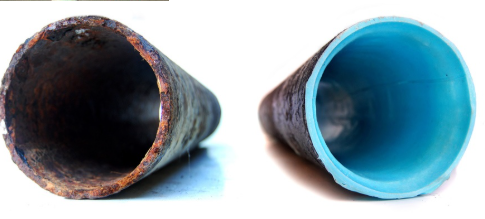
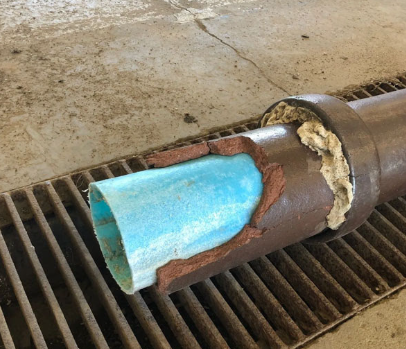
CIPP lining (cured-in-place pipe): A resin-saturated felt or fiberglass liner is inserted into the existing pipe, either pulled or inverted into place, then cured using hot water, steam, or UV light. Once cured, it hardens into a smooth, jointless pipe inside the original one. The old pipe becomes the mold; the new structural pipe is the liner. This method is governed by recognized engineering standards, including ASTM F1216 for inversion-installed liners and ASTM F1743 for pulled-in-place systems.
Epoxy spray lining: A thinner epoxy coating is sprayed or brushed onto the interior of the existing pipe, usually using a rotating spray head pulled through the line. It coats and seals the inside of the pipe but doesn't create the same thick, independently structural layer that CIPP does.
Where Each Method Falls Short
Traditional repipe's problem is everything around the pipe, not the pipe itself. You're not just paying for new pipe, you're paying to dig up and then restore your yard, driveway, patio, or whatever happens to sit on top of that line. On a typical residential repair, that excavation and restoration cost can rival or exceed the cost of the pipe work itself. It also means days of disruption instead of hours, and there's real risk to landscaping, hardscaping, and even structural elements near the dig site.
Epoxy spray lining's problem is that it's a coating, not a structural pipe. It works well for sealing minor pinhole leaks or light corrosion, particularly in water supply lines, but it isn't designed to bridge real structural defects like cracks, root intrusion, or offset joints in a drain line. Because the coating is thin, it doesn't add meaningful strength to a pipe that's structurally compromised. If the underlying pipe is doing more than mild deteriorating, a spray coating is patching a problem rather than fixing it. It's also more sensitive to application conditions: incomplete drying or uneven coverage during application can leave weak spots that show up as failures later.
CIPP's limitation, to be fair about it, is that it isn't right for every pipe. It needs the original pipe to still hold its general shape. If a section has fully collapsed, or is severely bellied or misaligned, there's no host structure left for the liner to bond to, and you're back to excavation or pipe bursting for that section. It also slightly reduces the interior diameter of the pipe, since you're adding a liner inside the existing wall, though for most residential drain sizes this has no real impact on flow.
Why We Lead With CIPP
For the majority of drain and sewer repairs we diagnose, the original pipe still has its structural shape, it's just cracked, corroded, root-infiltrated, or leaking at a joint. That's precisely the situation CIPP is built for. It gives you a genuinely structural, jointless new pipe rather than a thin seal, without the excavation cost, the yard damage, or the multi-day timeline of a full repipe.
A few reasons this is where we steer most customers:
- It's actually structural, not just a seal. Unlike epoxy spray, a cured CIPP liner is designed and tested to standards like ASTM F1216 to function as a standalone structural pipe, supported by the host pipe around it.
- Minimal access points. Most jobs only need one or two small access points rather than a trench running the length of the pipe.
- Speed. Many residential CIPP jobs are completed in a single day, including cure time, compared to several days for excavation and restoration.
- No landscaping, driveway, or hardscape damage. This alone often makes CIPP the better value even when the lining itself costs more per foot than repiping, once you add in the cost of restoration after a dig.
- Root resistant. Once the liner is cured, it creates a smooth, seamless interior with no joints. Root intrusion, one of the most common causes of drain line failure in older neighborhoods, has no joint to get through anymore.
- Long service life. A properly installed CIPP liner has a service life generally cited in the 35–50 year range, which puts it in the same conversation as new pipe, not a temporary patch.
We still recommend traditional repipe when a section has fully collapsed, when there's severe offset or bellying, or when local code requires full replacement for other reasons. And we'll point a customer toward epoxy spray on select water-line situations where it genuinely fits. But for the standard case, a drain line with cracks, corrosion, leaking joints, or root intrusion, CIPP gives you the most durable fix for the least disruption to your property.
A Simple Way to Think About It
If your pipe still has its shape, and the problem is what's happening to the pipe wall (corrosion, cracks, root intrusion, leaking joints), lining makes sense, and CIPP gives you the more durable result of the two lining options.
If the pipe itself is gone, collapsed, badly misaligned, or crushed, no liner is going to fix that. That's a repipe job, full stop.
If you're not sure which category your pipe is in, that's exactly what a camera inspection is for, and it's the first thing any honest technician should do before recommending either path.
Sources and Further Reading
- ASTM F1216 – Standard Practice for Rehabilitation of Existing Pipelines by the Inversion and Curing of a Resin-Impregnated Tube — the governing engineering standard for inversion-installed CIPP liners
- ASTM F1743 – Standard Practice for Rehabilitation of Existing Sewers and Conduits by Pulled-in-Place Installation of CIPP — the standard for pulled-in-place CIPP systems
- Pipe Relining vs. Pipe Replacement: Pros, Cons, Costs, and When to Choose Each — a detailed technical breakdown of relining vs. replacement decision criteria
- Epoxy Pipe Lining Pros and Cons: Cost and Pipe Requirements — overview of where spray epoxy lining fits and its limitations
- Cast Iron Replacement vs. Cured-In-Place Pipe Lining (CIPP) — comparison of timelines and structural tradeoffs between full replacement and CIPP
— American Home Pros of Arizona
Frequently Asked Questions
- What is CIPP (cured-in-place pipe) lining?
- CIPP lining inserts a resin-saturated felt or fiberglass liner into your existing pipe, then cures it with hot water, steam, or UV light. It hardens into a smooth, jointless structural pipe inside the original one — the old pipe becomes the mold. It's governed by engineering standards including ASTM F1216 and ASTM F1743.
- Is CIPP lining better than repiping?
- For most drain repairs, yes. If the original pipe still holds its shape and the problem is cracks, corrosion, root intrusion, or leaking joints, CIPP gives you a structural, jointless new pipe without the excavation cost, yard damage, or multi-day timeline of a full repipe. We still recommend repiping when a pipe has fully collapsed or is severely misaligned.
- What's the difference between CIPP and epoxy spray lining?
- Epoxy spray lining is a thin coating sprayed onto the inside of a pipe — good for sealing minor pinhole leaks, mostly in water supply lines. CIPP creates a thick, independently structural pipe that can bridge real defects like cracks, root intrusion, and offset joints. Epoxy seals; CIPP rebuilds.
- How long does a CIPP liner last?
- A properly installed CIPP liner has a service life generally cited in the 35–50 year range, putting it in the same conversation as new pipe rather than a temporary patch.
- When is CIPP lining not the right choice?
- CIPP needs the original pipe to still hold its general shape. If a section has fully collapsed, is severely bellied, or badly misaligned, there's no host structure for the liner to bond to — that's a repipe (or pipe bursting) job. A camera inspection is the only reliable way to tell which category your pipe is in.
- Does CIPP lining reduce the diameter of my pipe enough to matter?
- Technically yes, slightly, since the liner adds a thin wall inside your existing pipe. In practice, this rarely affects flow in a meaningful way for residential drain sizes. The new interior is also smoother than old, scaled, or root-damaged pipe, so many homeowners actually see improved flow despite the minor reduction in diameter.
- Can every pipe be lined with CIPP, or are there pipes that just can't be done this way?
- Not every pipe qualifies. CIPP needs the original pipe to still hold its basic shape. If a section has fully collapsed, has a significant "belly" (a low spot where the pipe has sunk), or has a severe offset where sections no longer line up, there's no structure for the liner to bond to. Those situations need a spot excavation or full repipe for that section. This is exactly why a camera inspection always comes before a recommendation, not after.
- Do I have to stop using water in my house during the process?
- For most residential jobs, yes, but only temporarily. While the liner cures (typically a few hours), the line is sealed off, so you'll want to avoid running showers, washing machines, dishwashers, or flushing toilets connected to that line until the work is finished. Most single-day residential jobs only require this for a portion of the day.
- Will there be a smell?
- Some odor, similar to plastic or glue, is normal during the curing process and comes from the resin. It dissipates quickly once the work is done and isn't something that lingers in the home afterward.
- What happens to branch lines, like a kitchen sink or another bathroom, that connect into the pipe being lined?
- When a main line is lined, any branch connections feeding into it get temporarily sealed off by the new liner. A technician then "reinstates" each of those connections, typically using a small robotic cutter with a camera, to reopen a smooth, properly sized opening at each junction. This is a normal, expected part of the process on any line with branch connections, not a sign something went wrong.
- How long does a residential CIPP job actually take?
- Most single-line residential jobs are completed in a single day, including the inspection, cleaning, liner installation, and cure time. Larger or more complex jobs with multiple branch connections can take longer, but it's still a different timeline than the multiple days typical of a full excavation and repipe.
- Is CIPP actually as durable as new pipe, or is it more of a patch?
- A properly installed CIPP liner is an independently structural pipe, not a coating or a patch. It's designed and tested against engineering standards like ASTM F1216, with a service life generally cited in the 35–50 year range, comparable to many new pipe materials.
- Is CIPP cheaper than a full repipe?
- It depends on the job, but often yes once you account for everything a repipe requires. CIPP usually costs more per foot than the bare cost of new pipe and excavation, but a traditional repipe also requires landscaping, driveway, or hardscape restoration afterward, and that restoration cost is where a lot of the real expense hides. For pipe runs that don't require full replacement, lining frequently comes out as the better overall value once those restoration costs are factored in.
Not sure whether your drain line needs lining or full replacement? A camera inspection is the honest first step. Call (602) 428-7027.
(602) 428-7027