I own American Home Pros of Arizona, an HVAC, plumbing, and electrical company. I've been in this industry long enough to see the good, the bad, and the genuinely predatory side of it. So when people ask me how to know if their AC company is telling them the truth, I don't give them a generic checklist. I tell them what I've actually seen walk through our service trucks.
Here's a recent one that still bothers me.
The $17,000 Quote for an $800 Fix
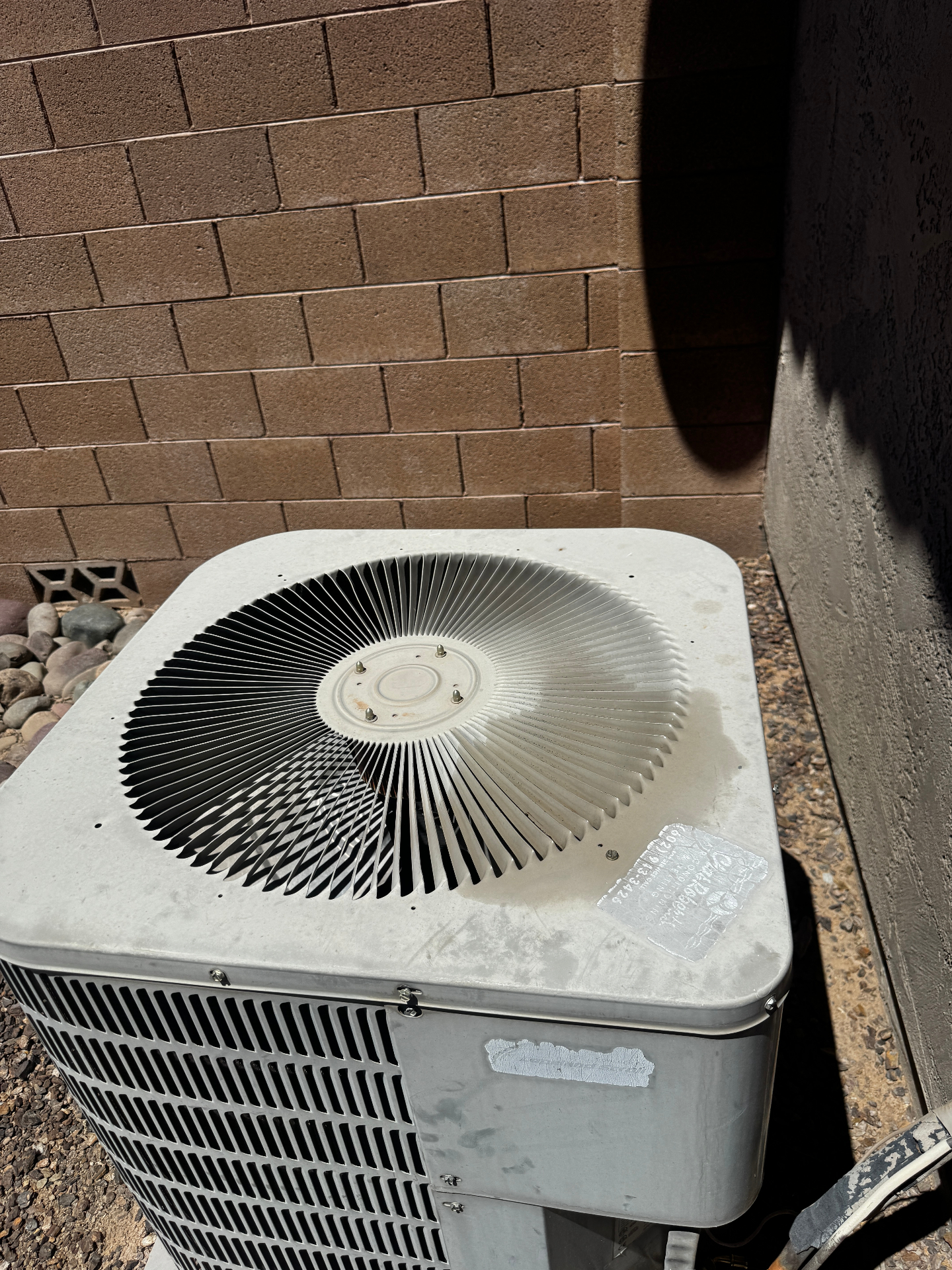
We got a call from an elderly widow. Her air conditioner was low on refrigerant, and the house was sitting at 95 degrees by the time we showed up. Before she called us, another company had already been out. Their technician looked at an oil stain on her outdoor unit, told her the system had a refrigerant leak, and said it would cost $3,500 to repair it — or she could just replace the whole system for $17,000.
She was overwhelmed, she was hot, and she was alone with that decision.
When our technician got there, we did a real leak search on that oily area first. Found nothing. So we kept looking and traced the actual leak to the Schrader port — the little valve technicians use to check refrigerant charge. It's a known wear point, and it's one of the easiest, cheapest things on an AC system to fix.
Our cost to repair the leak and recharge her system: just under $800. We ended up not charging her anything at all. We don't do that on every job, but our techs have the authority to make that call when a situation calls for it, and this one did.
That's not a "gotcha" story I'm telling to make us look good. It's an example of how wide the gap can be between what's wrong with a system and what someone is willing to tell you is wrong with it.
Why This Happens: Follow the Incentive, Not the Uniform
Here's the part most articles about "how to spot a scam" skip over, because it's not as simple as "get three quotes" or "check Google reviews." The real predictor of honesty isn't the company's logo or how nice the truck looks. It's how the technician standing in your backyard gets paid.
A lot of companies — especially larger ones — run technicians on a commission structure. If that tech doesn't sell something, they're making close to minimum wage that day. So you've put a person in your backyard whose income depends on finding something expensive wrong with your system. Most of these techs aren't bad people. They're responding rationally to a bad incentive.
There's also a skill gap that compounds this. A less experienced technician may genuinely not know how to find a Schrader valve leak or chase a slow leak through a system properly. Replacement is the easy answer when you don't have the diagnostic depth to find the real problem. So you get a recommendation to replace a $20 part with a $17,000 system, not necessarily out of malice, but out of a mix of inexperience and a paycheck riding on the answer.
At our company, technicians are paid hourly, and paid well. Whether they sell a $50 repair or nothing at all that day, they get the same paycheck. That changes what they're incentivized to tell you. It's also why we can afford, financially and culturally, to occasionally walk away from an $800 invoice when the right thing to do is take care of someone.
This isn't just an opinion I hold because it's good marketing. It's a widely acknowledged problem inside the industry itself. Companies that openly discuss commission-based pay structures for HVAC technicians acknowledge the same tradeoff we're describing here: when a technician's income is tied to ticket size, the financial pressure to recommend bigger repairs or full replacements goes up, even among technicians who don't think of themselves as dishonest. It's a structural problem, not just a character problem.
A 2025 survey of 1,000 homeowners by FIELDBOSS found that homeowners' biggest fears around HVAC service are breakdowns during extreme weather and safety issues, not necessarily price. That's exactly the vulnerability a high-pressure recommendation exploits: when someone is scared and uncomfortable, "replace the whole system today" is easier to say yes to than it would be on a calm day with time to think.
The Private Equity Pattern Nobody's Watching For
Here's something I'd genuinely encourage you to check before you trust any AC company in Arizona right now: who actually owns it.
Over the last several years, private equity firms have been buying up HVAC, plumbing, and electrical companies across the country — and Arizona has been a hot market for exactly this kind of acquisition, given how essential AC is here. The strategy is usually the same: buy a well-regarded local company, keep the name, keep the logo (sometimes), and keep the "family-owned" feel in the marketing, while running the business on a different financial model behind the scenes — often centered on growth targets and margin, not the founder's original relationship with the community.
This isn't a fringe theory. The Wall Street Journal has reported on this trend directly, profiling Rite Way, a Tucson-based HVAC company that grew from $30 million to roughly $70 million in annual revenue after a private equity firm acquired it and rolled it into a larger platform alongside plumbing and electrical brands. One industry tracking site lists more than 27 active private equity firms currently buying HVAC companies as of 2026, including a Phoenix-headquartered commercial HVAC and plumbing company acquired by a Canadian pension-fund-backed private equity firm. This is a documented, ongoing pattern in this exact market, not a one-off.
That doesn't automatically mean a company will treat you badly. But it does change the pressures on the people working for it. A few things I'd watch for:
- The owner used to be the face of the company, and now isn't. If a business used to run ads with the founder's name and face front and center, and over the past few years that person has quietly disappeared from the marketing, that's worth a Google search.
- The branding has been "refreshed." New logo, new truck wraps, more corporate-feeling marketing — sometimes that's just normal business evolution, but it's also a common move after an acquisition.
- Maintenance visits keep turning into $1,000+ "recommendations." If a company you've used for years suddenly seems to find something that needs replacing or upgrading at nearly every single maintenance visit, that's not a coincidence. That's usually a sales quota working its way down to the technician in your driveway.
- A quick search tells you who actually owns it. Search the company name plus "private equity" or "acquired." A lot of this information is public — press releases, industry trade articles, even LinkedIn bios of the people who run the parent company.
None of this means a PE-owned company will scam you, and none of it means a small "family-owned" company is automatically trustworthy either. But knowing who's actually behind the company you're letting into your backyard is a piece of information most homeowners never think to look for, and it's one of the better predictors of how that visit is going to go.
What We Do Differently, and Why It's Not Complicated
One practice we've built into how our technicians work: when they find something significant, they record a short video on-site, say the customer's first name, walk the camera around to something the homeowner can recognize, and explain exactly what they found and why it matters. It's not a sales tool. It's so the homeowner has something concrete to look at later, show a family member, or just confirm for themselves that what they were told matches what's actually there.
It's a small thing. It's also something a commission-driven sales tech, or a tech rushing to hit a quota, has no incentive to do.
What to Actually Do When You're Standing in a Hot House
If you're in the middle of this right now — a tech just told you that you need a new system, and you don't know if that's true — here's what I'd tell a neighbor:
- Ask what exactly was found, specifically. Not "a leak somewhere." Where. If they can't point to it, that's a flag.
- Ask if they did a leak search, and how. A real leak search (electronic detector, UV dye, soap bubbles on suspect joints) is different from "I saw an oil stain and assumed."
- Get a second opinion before authorizing five-figure work, especially if the first quote came with urgency attached. A widow alone in a 95-degree house is exactly who urgency tactics are aimed at.
- Ask how the technician is paid. You can ask this directly: "Are you on commission?" Most won't lie about it outright, and the answer tells you a lot.
- Search who owns the company. Two minutes on Google can tell you whether you're dealing with the local business you think you are.
I started this company believing that taking care of people is good business, not in spite of the bottom line, but because of it. That widow is still a customer of ours. She tells her neighbors. That's worth more than the $800 we didn't charge her, every time.
— American Home Pros of Arizona
Frequently Asked Questions
- How can I tell if an AC repair company is being honest?
- Ask exactly what was found and where, ask whether they performed a real leak search and how, ask how the technician is paid (commission vs. hourly), and get a second opinion before authorizing five-figure work — especially if the first quote came with urgency attached.
- Why do some technicians recommend replacing my whole system?
- Many companies pay technicians on commission, so their income depends on selling expensive work. Combine that with a skill gap — a less experienced tech may not be able to find a small leak — and full replacement becomes the easy answer, even when a cheap repair would fix the problem.
- Does private equity ownership affect how an AC company treats me?
- It can. Private equity firms have been buying up HVAC companies across Arizona, keeping the local name and family-owned feel while running on growth and margin targets. That doesn't guarantee bad service, but it changes the pressures on technicians. Search the company name plus 'private equity' or 'acquired' to see who really owns it.
- Should I get a second opinion before replacing my AC?
- Yes. Before authorizing five-figure work, get a second opinion — especially if the first quote came with urgency. A real leak search uses an electronic detector, UV dye, or soap bubbles on suspect joints, not just 'I saw an oil stain and assumed.'
Want a second opinion from a family-owned team that pays its techs hourly — never on commission? Call (602) 428-7027.
(602) 428-7027