
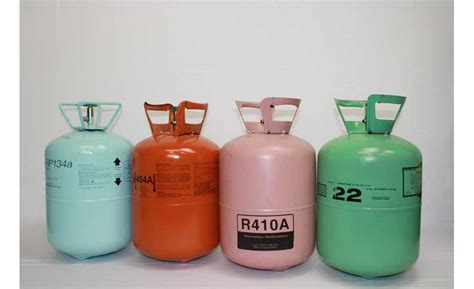
R22 hasn't been made in the U.S. since 2020
R22 (often called "Freon," though that's technically a brand name) was the standard residential refrigerant for decades before it was phased out for environmental reasons. The EPA banned production and import of new R22 as of January 1, 2020. Everything on the market since then is reclaimed, recycled, or leftover stockpiled supply — there is no new R22 being made. That scarcity is exactly why prices have climbed so much over the past several years, and why it keeps getting harder to find. It's the same regulatory pressure now working its way through newer refrigerants, which I broke down in our post on why AC refrigerant costs are rising under the EPA phasedown.
Why you probably can't just buy a can and charge your own system
This is the part most "where to buy R22" searches miss. Under EPA Section 608 regulations, refrigerant sales are restricted — sellers are generally required to sell to EPA-certified technicians, not the general public. Some suppliers will sell small quantities to individuals, but only if you can show the refrigerant is going to a licensed technician for installation, often requiring a signed statement to that effect. In practice, that means most legitimate suppliers won't just ship a can of R22 to a homeowner planning to add it themselves.
And that restriction isn't just red tape. Handling pressurized refrigerant without EPA 608 certification is genuinely risky — frostbite from contact with the liquid, asphyxiation risk in enclosed spaces, and system damage from incorrect charging levels are all real outcomes of DIY refrigerant handling. This is one of the few areas of home AC work where the legal requirement and the safety requirement point in the exact same direction.
What this means if your R22 system is low on refrigerant
If your system is old enough to run on R22, low refrigerant almost always means you have a leak — refrigerant doesn't just "run low" on its own the way gas in a car does. Simply adding more without finding and fixing the leak means you'll be back in the same spot in a matter of months, paying for refrigerant again at today's prices.
At this point you're really choosing between two paths:
1. Repair the leak and recharge with reclaimed R22
This can make sense if your system is otherwise in good shape and reasonably young for an R22 unit. A technician locates and repairs the leak, then recharges the system using reclaimed R22 supply. This keeps your existing system running without a full replacement, though refrigerant cost itself will be higher than it would be on a modern system. That's standard AC repair and refrigerant leak diagnosis work for our technicians.
2. Replace the system with a modern refrigerant
If your R22 system is old, has a history of repeat leaks, or is nearing the end of its expected lifespan anyway, replacement often ends up being the more cost-effective choice over a 2–3 year window — especially with R22 prices continuing to climb as supply shrinks further. Modern systems also run on more efficient refrigerants, which typically shows up as a lower cooling bill. Here's what's involved in a full HVAC system installation.
Neither path is a DIY purchase decision — both require a licensed technician to diagnose the actual problem first. A good diagnostic will tell you honestly which of the two makes more financial sense for your specific system, rather than pushing you toward whichever option is more profitable to sell.
What to ask before you commit to either option
- Can you show me exactly where the leak is, not just tell me one exists?
- What would repair-and-recharge cost me today, all in?
- What would full replacement cost, and what refrigerant would the new system use?
- Is the technician doing this work paid hourly, or on commission?
- What's the warranty on the repair versus the warranty on a new install?
A company with nothing to hide will walk through all five of these without pushing you toward the more expensive option before you've asked.
Where we come in
I run American Home Pros of Arizona, and this is exactly the kind of call our hourly-paid (not commissioned) technicians handle regularly across the Phoenix Valley. We'll diagnose the actual leak, give you a flat-rate price for repair-and-recharge before any work starts, and if replacement genuinely makes more financial sense for your system's age and condition, we'll tell you that honestly instead of defaulting to the bigger sale. Either way, you get a straight answer instead of a sales pitch dressed up as a diagnosis.
We're licensed under ROC #333121, #366091, and #365919 — all verifiable at roc.az.gov — and we back our work with a 5-year workmanship guarantee in writing, included for members of our A-Team Maintenance Club. Same-day service is available across the 15 cities we cover in the Valley, from our Queen Creek headquarters and our north Phoenix/Anthem office.
We don't sell refrigerant to the public — no licensed contractor does. What we sell is an honest diagnosis and a fair price on the fix.
R22 Freon FAQ
- Can homeowners legally buy R22 Freon?
- In most cases, no. Under EPA Section 608 regulations, refrigerant sales are restricted — sellers are generally required to sell to EPA-certified technicians rather than the general public. Some suppliers will sell small quantities to individuals, but only with proof (often a signed statement) that the refrigerant is going to a licensed technician for installation. In practice, most legitimate suppliers will not ship a can of R22 to a homeowner planning to charge their own system.
- Can you show me exactly where the leak is, not just tell me one exists?
- A technician should be able to point to the actual leak location — a coil, a fitting, a line set — using electronic detection, bubble solution, or dye. If a company says "you have a leak somewhere" and immediately quotes a recharge or a replacement, you don't have a diagnosis yet.
- What would repair-and-recharge cost me today, all in?
- Ask for one flat-rate number that includes the leak repair, the reclaimed R22 refrigerant itself, and any evacuation or testing. Because R22 has not been produced in the U.S. since 2020, the refrigerant line item is the part that varies most — get it in writing before work starts.
- What would full replacement cost, and what refrigerant would the new system use?
- A modern replacement system will run on a current refrigerant rather than R22, which removes the scarcity problem entirely and typically improves efficiency. Ask for the replacement quote side by side with the repair quote so you can compare over a 2–3 year window instead of just today.
- Is the technician doing this work paid hourly, or on commission?
- This matters more on an R22 call than almost any other. A commissioned technician has a financial reason to steer an R22 system toward replacement. Our technicians at American Home Pros of Arizona are paid hourly, never on commission, so repair versus replace is a math question rather than a sales question.
- What's the warranty on the repair versus the warranty on a new install?
- Get both terms in writing. We back our work with a 5-year workmanship guarantee, in writing, and equipment carries its own manufacturer warranty on a new installation.
Have an R22 system that's low on refrigerant or acting up? Call (602) 428-7027 or request same-day service online — we'll diagnose the actual issue and give you a straight answer on repair vs. replacement.
(602) 428-7027