
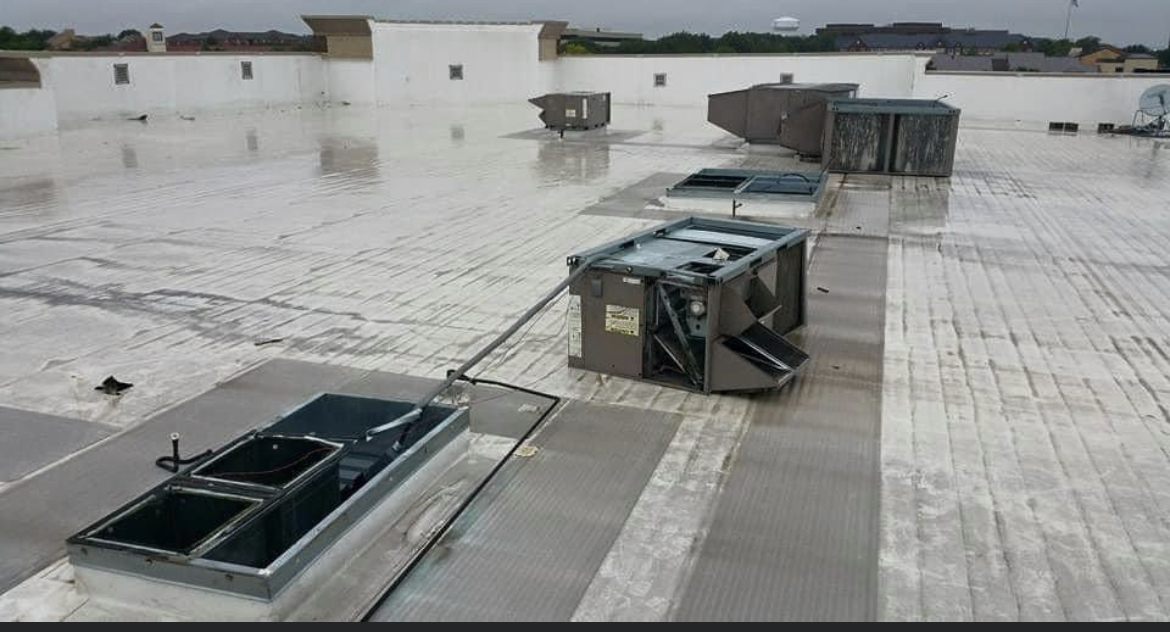
If you live in Anthem, New River, Cave Creek, Queen Creek, or San Tan Valley, you already know that your air conditioner isn't optional equipment. With temperatures regularly topping 110°F and one of the most aggressive haboob seasons in the country hitting communities like San Tan Valley and Queen Creek directly, your HVAC system works harder — and lives a harder life — than systems almost anywhere else in the United States.
That means when it's time for a replacement, the questions you ask matter more here than in most places. A generic quote from a company that doesn't understand this specific climate zone can leave you with a system that's improperly sized, poorly protected, or under-warrantied.
At American Home Pros of Arizona, we serve all five of these communities out of our two Valley locations, and we've built our process around these exact conditions. Here are the seven questions we believe every homeowner in this area should ask before signing off on a new installation — and exactly how we answer them.
1. Will the new condenser include a coil guard, and how well does it handle haboob season?
This one matters more in Cave Creek, New River, Queen Creek, and San Tan Valley than almost anywhere in the country. The National Weather Service regularly issues dust storm warnings covering all five of our service communities, and the haboobs that roll through during monsoon season (July through mid-September) carry fine particulate matter that is genuinely destructive to HVAC equipment over time.
A coil guard — a protective louvered cover around the outdoor condenser coil — is a physical barrier against debris, rocks kicked up by mowers, and the thick walls of dust that hit the outer East Valley and North Valley communities in particular. Not every manufacturer includes one as standard equipment. We specify units with coil guards for every installation in our service area, and we treat it as non-negotiable for homes on open desert lots in New River, Cave Creek, and rural San Tan Valley, where there's nothing between your backyard and a haboob.
Beyond the coil guard, we also recommend:
- Annual coil cleaning after monsoon season, when fine dust has packed into the fins and reduced airflow and efficiency
- Placing condensers away from prevailing wind directions where possible, or using landscaping as a windbreak
- Checking refrigerant lines and electrical connections more frequently in high-dust environments, since particulate infiltration accelerates wear at connection points
For homes in Anthem and North Phoenix/New River, where dust storms combine with pollen from desert vegetation, this maintenance cadence is especially important — it's a core part of our AC maintenance visits.
2. Do you recommend a single-stage, two-stage, or variable speed system for this climate zone?
This is a question where the honest answer depends on your specific home — but where our climate zone makes the answer more obvious than in most parts of the country.
Single-stage systems run at 100% or off. They're less expensive upfront but cycle on and off more frequently, which means more wear, more humidity swings, and less precise comfort control. In a climate like ours, where a system may run nearly continuously for months, the efficiency penalty adds up fast.
Two-stage systems have a low-speed setting (typically around 70% capacity) and a high speed. They run longer cycles at lower capacity during moderate temperatures, which is more energy efficient and does a better job managing indoor humidity — a real concern in late-summer monsoon conditions across Queen Creek and San Tan Valley.
Variable speed systems (also called inverter-driven systems) modulate continuously, running at precisely the capacity the home needs at any moment. They're the most efficient option, the quietest, and the best at humidity control. They're also the most expensive upfront.
Our recommendation for this climate zone: For most homes in Anthem, Cave Creek, Queen Creek, and San Tan Valley, we lean toward at minimum a two-stage system, and ideally a variable speed unit for any home over 2,000 square feet. The combination of extreme summer heat, monsoon humidity, and 3,000+ annual runtime hours makes those efficiency and longevity advantages genuinely meaningful over a 10–15 year equipment lifespan. If your home has significant hot and cold spots, it's also worth asking about zoned HVAC at the same time.
3. What indoor air filtration do you bundle with the install?
This question is more important in our five service communities than it is in most of the country. Homes near undeveloped desert parcels see the heaviest pollen infiltration, and summer monsoon dust storms blast fine particulate across San Tan Valley, Queen Creek, and Cave Creek every year. HVAC systems in this area run 3,000+ hours per year — which means 3,000 hours of pulling air through ductwork that may accumulate dust, biological growth, and construction debris. A standard 1" filter does not address that environment adequately.
What we offer:
- 4" media filters — also called whole-house air cleaners, these thicker, high-MERV media filters capture significantly more particulate than a 1" filter and need changing far less often (typically once or twice a year versus monthly).
- Filtered return grilles — supplementary filtration in areas with high dust load, before air ever enters the duct system.
- UV air purifiers — germicidal systems installed in the air handler for homes where mold or bacterial contamination is a concern.
- Whole-house ventilators and ERVs — for tighter, newer construction in Anthem and Queen Creek where fresh air exchange is limited.
We always discuss indoor air quality options during quoting, not as an afterthought at installation. The right decision for a home on a paved lot in central Anthem is genuinely different from the right decision for a home on an acre of raw desert in Cave Creek or New River.
4. Will you do a Manual J load calculation, or are you sizing based on the old unit?
This is one of the most important questions on this list — and one where a lot of contractors take the easy wrong answer.
Sizing a replacement based on the old unit assumes the old unit was correctly sized in the first place. That's often not true, particularly in newer construction in Queen Creek and San Tan Valley, where builders sometimes installed minimum-spec equipment to reduce build costs. It also ignores changes made since the original install — added square footage, window replacements, attic insulation upgrades, patio enclosures — all of which change the actual thermal load of the structure.
The correct answer is a Manual J load calculation — every time. Manual J is the industry-standard, ACCA-approved method for calculating the precise heating and cooling load of a specific home based on square footage, ceiling height, insulation values, window types and orientation, local climate data, and infiltration rates. It accounts for your specific ZIP code's design temperatures — critical when you compare the shading and elevation of Cave Creek to the flat, fully sun-exposed lots common in San Tan Valley.
Our technicians perform Manual J calculations in the field using Wrightsoft Right-J Mobile, the ACCA-approved mobile load calculation software. This isn't done back at the office days later — our tech does it at your home, on-site, so the calculation reflects your actual structure.
If a company quotes you a system size without running a Manual J, ask them why. "We've been doing this for years" is not a load calculation. "Your old system was a 4-ton" is not a load calculation. Those are guesses that can leave you with a system that short-cycles in mild weather, can't keep up in peak heat, or runs your energy bills higher than they need to be.
5. What is the exact SEER2 rating of the equipment you're quoting?
As of January 1, 2023, federal efficiency standards require new residential HVAC equipment sold in the Southwest region — including Arizona — to meet SEER2 ratings rather than the old SEER standard. SEER2 uses a different testing methodology (M1 test conditions), so SEER2 numbers are not directly comparable to old SEER numbers. A 15 SEER2 unit is roughly equivalent to a 15.9–16 SEER unit under the old standard. The minimum for new single-split installations in Arizona is 14.3 SEER2.
When comparing quotes, make sure you're comparing SEER2 to SEER2 — not SEER2 to old SEER. A quote that lists "16 SEER" without specifying SEER2 may be using outdated rating language, or quoting equipment that isn't compliant with current Southwest standards.
Ask specifically: "What is the SEER2 rating of the exact model you're quoting?" A reputable contractor will know that number immediately for every unit they carry. Higher SEER2 ratings cost more upfront but pay back in energy savings. For homes in Anthem, Queen Creek, and San Tan Valley where cooling may run 8–9 months a year, the premium on a 17 or 18 SEER2 unit versus a minimum-spec 14.3 SEER2 unit is meaningful across a 12–15 year lifespan.
6. Does my existing ductwork have the capacity for the new unit, and how do you check for leaks?
Ductwork is one of the most overlooked parts of an HVAC replacement, and one of the most consequential here. If the ductwork wasn't designed or installed to match the new system's airflow requirements, you'll get poor distribution, high static pressure, and a system that works harder than it should — even if the equipment itself is excellent. New system, same problems.
How we check:
- Visual inspection of accessible duct runs in the attic and mechanical room
- Static pressure testing to measure whether airflow through the duct system matches what the new equipment requires
- Duct leakage testing using pressurization to identify where conditioned air escapes before it reaches the living space
A note on Aeroseal: where leakage is found, we offer Aeroseal duct sealing. Aeroseal pressurizes the duct system and injects a non-toxic aerosolized polymer sealant; the particles stay suspended in the airflow until they reach an escaping-air gap, then collect at the edges and seal it from the inside out — reaching places tape or mastic applied from the outside simply can't.
Aeroseal is an additional cost, and we're upfront about that. But leaky ducts can allow up to 30% of conditioned air to escape before it ever reaches your living space, and in older homes in Cave Creek, Anthem, and New River, significant leakage is common. Sealing those leaks at installation means the new system can actually perform at the efficiency rating on the label, not 70% of it. It also prevents dust, allergens, and contaminants from entering the system through wall cavities and attics — a direct benefit for San Tan Valley and Queen Creek homeowners dealing with haboob particulate and monsoon pollen.
7. What is the warranty, and how does it work?
Warranty language in HVAC is one of the places where a lot of homeowners get surprised after the fact. A typical manufacturer warranty covers the equipment itself — compressor, coil, heat exchanger — for a set period, usually 5 or 10 years depending on the manufacturer and whether the equipment was registered. What it usually does not cover is the labor to diagnose and install the warranty replacement part. That's the contractor's labor warranty, and it's entirely separate.
Our standard labor warranty on new installations is 2 years. If something fails in the first two years and it's a workmanship issue — a fitting we installed, a connection we made — we come back at no charge. If you're on our A-Team Maintenance Program, we extend that labor warranty to 5 years.
The A-Team program keeps your system maintained on a regular schedule, which is how we can stand behind it longer. A maintained system catches small problems before they become failures, runs closer to its rated efficiency, and holds up better through Arizona's extreme operating seasons. The extended warranty is one benefit — the other is the peace of mind of a tech who knows your system's history.
Ask any contractor you get a quote from: "What does your labor warranty cover, for how long, and does it cover the whole system or just the parts you personally installed?" The answers vary widely, and the details matter when something goes wrong at month 30.
Key takeaways
- Coil guards are non-negotiable here: Haboob season drives fine particulate straight into outdoor coils in New River, Cave Creek, Queen Creek, and San Tan Valley.
- Two-stage minimum, variable speed preferred: With systems running 3,000+ hours a year, modulating capacity pays back in efficiency, comfort, and equipment life.
- Manual J or it's a guess: We run ACCA-approved load calculations on-site with Wrightsoft Right-J Mobile — never sized off the old unit.
- Ductwork and warranty terms decide the outcome: Leaky ducts can waste up to 30% of conditioned air, and labor warranties vary widely between contractors.
Frequently asked questions
- I'm in Anthem — is my situation different from someone in Queen Creek or San Tan Valley?
- Somewhat, yes. Anthem and New River sit at a slightly higher elevation than the Southeast Valley communities and have different lot characteristics — more established landscaping in many neighborhoods, and proximity to the Daisy Mountain area. Queen Creek and San Tan Valley sit in Pinal County and the extreme Southeast Valley, where wide open terrain means haboobs and particulate loads hit harder and more directly. The core HVAC questions apply everywhere we serve, but the filtration and coil protection recommendations are especially urgent for open-lot desert communities.
- How long does a full AC replacement take in one of these communities?
- A straightforward replacement with a pre-confirmed equipment order is typically a one-day installation. We schedule early morning start times during summer months to protect both our technicians and your household from working in peak afternoon heat.
- Can you service both my main home unit and any mini-splits or secondary systems?
- Yes. We handle full system replacements, ductless mini-split installation and service, and auxiliary systems across all five communities we serve.
- What's the biggest mistake homeowners make when replacing an AC system?
- Choosing based on price alone without asking about sizing. An undersized system will run constantly and never quite cool the house in peak July heat. An oversized system will short-cycle — cool the house quickly and shut off — which leads to humidity problems, excessive wear on the compressor, and inconsistent comfort. Neither is fixed by the equipment itself. It's fixed by doing the Manual J calculation before the equipment is ever ordered.
- Do you offer financing on new system installations?
- Yes. We offer financing options for new installations. Contact us directly for current terms and to discuss what works for your situation.
- What's the best time of year to replace my system in these communities?
- Spring (March through May) is the ideal window — before peak cooling demand and typically before the price increases manufacturers often announce heading into summer season. We're seeing manufacturer price increases effective August 2026, so acting in late summer or fall before the next round may also be worth considering. That said, if your system fails in July, we treat it as an emergency and work to get you back online as quickly as possible regardless of timing.
- Do you pull permits for new installations?
- Yes, always. Any reputable HVAC contractor in Maricopa and Pinal counties pulls the required mechanical permits for new system installations. A system installed without a permit can create complications when you sell the home, and a permitted installation includes a city or county inspection that provides independent verification the work was done correctly.
Sources and further reading
- Wrightsoft Right-J Mobile — the ACCA-approved field software our technicians use for on-site load calculations
- ACCA Manual J technical standards — what Manual J calculates and why it matters for sizing
- Aeroseal duct sealing — how it works — official overview of the process and what it seals
- U.S. Department of Energy — efficiency standards — background on SEER2 and regional minimums
Get a Manual J-based quote — no pressure, no commission upsells
American Home Pros of Arizona serves Anthem (85086, 85087), New River, Cave Creek (85331), Queen Creek (85142), San Tan Valley (85140), and 10 additional communities across the Phoenix Valley. Our main office is in Queen Creek, with a second location near Anthem. Call (602) 428-7027 or schedule online to get a load-calculated replacement quote.