
Living in Gilbert, Arizona, means relying heavily on your central air conditioning system to maintain a cool, comfortable indoor environment through long, scorching summer months. When outdoor temperatures routinely climb into triple digits, even a tiny flaw in your HVAC system can turn specific areas of your house into uncomfortable hot spots. Homeowners in the East Valley frequently notice that certain rooms — particularly those facing west — remain stubbornly warm no matter how long the air conditioner runs.
While it is easy to assume a struggling cooling system stems from a failing compressor or low refrigerant levels, the real culprit often lies completely out of sight inside your attic. Compromised ductwork, legacy splices from previous equipment, and leaking junction boxes quietly release conditioned air directly into your attic instead of delivering it to your living areas. Addressing these invisible airflow bottlenecks is one of the most effective strategies for restoring balanced comfort and lower power bills.
Understanding how attic ductwork deteriorates or suffers from improper legacy modifications helps you recognize the warning signs in your own home. Below, we examine a real-world Gilbert attic inspection that uncovers how hidden duct leaks develop and how targeted repairs resolve uneven cooling once and for all.
The Common Culprits: Spliced Ducts and Leaky Mix Boxes
Attic duct systems in older or retrofitted Arizona homes often carry the history of past HVAC alterations. Decades ago, many properties relied on evaporative coolers (swamp coolers) before upgrading to modern refrigerated central air conditioning. During these past conversions, technicians sometimes spliced existing large supply lines — such as 14-inch flex ducts — into newer duct configurations rather than running complete, seamless replacement lines. Over time, these splice connections degrade due to thermal expansion, failing tape, and settling insulation, creating significant gaps where conditioned air escapes.
Another frequent offender in attic distribution networks is the junction box, often configured as a triangle mix box. This component acts as a central hub, receiving high-volume air from the main supply trunk and dividing it among smaller branch ducts that lead to individual rooms. Because mix boxes consist of metal or fiberboard panels joined at angled seams, they require meticulous sealing with specialized mastic sealant and foil tape. When those seams loosen or crack, refrigerated air blasts directly into the sweltering attic space, drastically reducing the static pressure needed to push cool air to the furthest corners of your home.
Identifying these physical defects requires a thorough physical inspection of the entire attic space rather than just checking temperatures at the supply registers inside the house.
Case Study: Fixing a Gilbert Attic Duct Leak
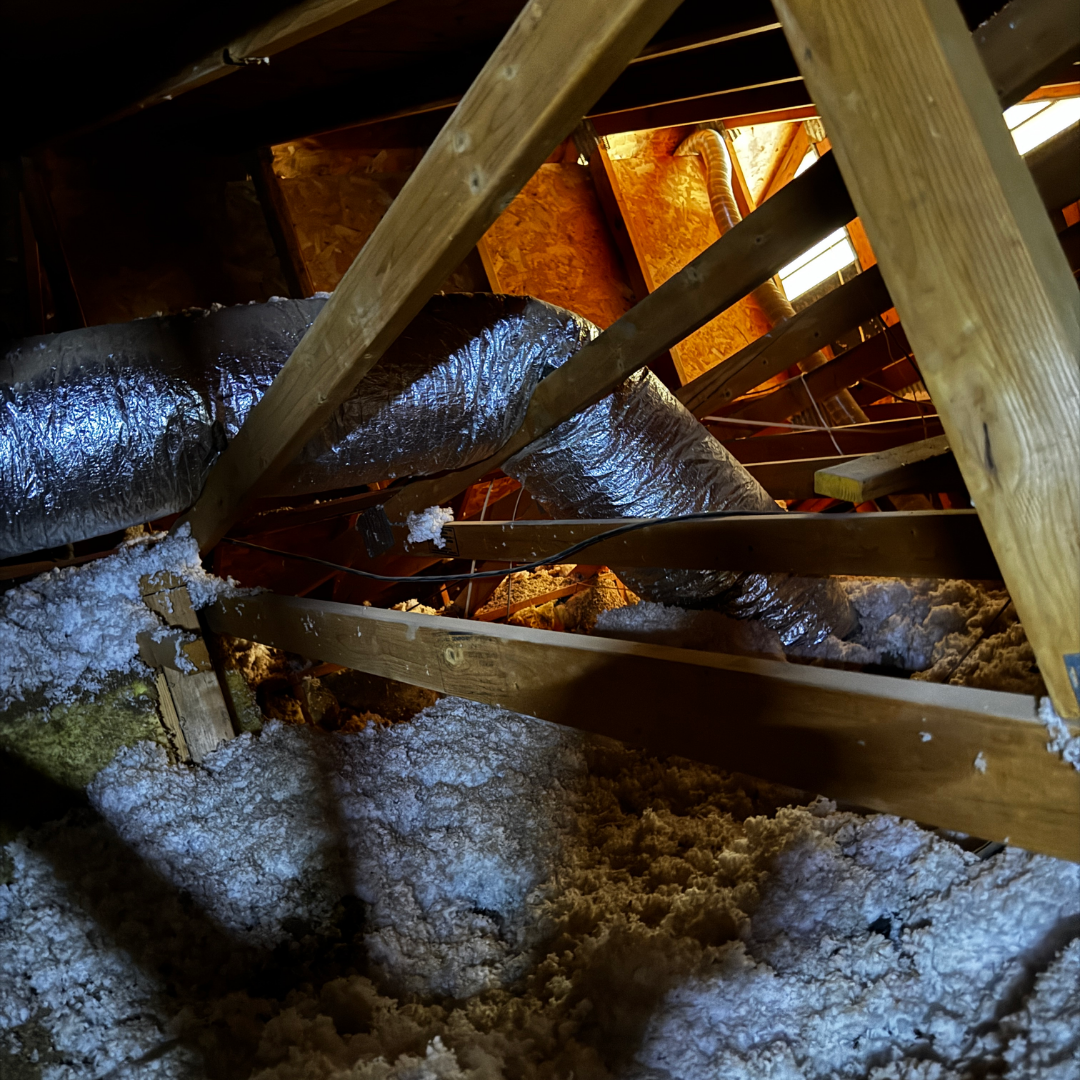
During a recent diagnostic service call in a local Gilbert home, our technician conducted a comprehensive attic evaluation to investigate reports of poor cooling performance along the western side of the property. Upon entering the attic, the technician inspected the main distribution network and discovered a 14-inch supply duct serving the west-facing rooms. Further examination revealed that this line had been makeshift-spliced together years ago at the location where an old evaporative cooler duct used to connect.
The 14-inch line fed directly into a central triangle mix box, where the inspection revealed a second critical defect. Air was leaking heavily around the entire perimeter of the mix box seams, blowing high-velocity chilled air directly into the 130-degree attic space. The combination of an improperly spliced supply run and compromised mix box seams meant that the west side of the home was receiving only a fraction of the airflow generated by the central cooling system.
To permanently resolve the airflow deficit, our team recommended a two-part corrective plan. First, the compromised 14-inch supply duct run to the west side of the home would be fully replaced with a seamless, properly insulated new line. Second, technicians would completely rebuild and hand-seal all joint seams around the triangle mix box using heavy-duty mastic sealant and foil-backed duct tape, ensuring airtight delivery throughout the system.
Investigating and resolving airflow restrictions in the attic delivers immediate performance gains that extend far beyond simply balancing room temperatures.
Benefits of Sealing and Replacing Attic Ductwork in Gilbert Homes
Investing in professional attic duct repair in Gilbert, AZ — both duct replacement and seam sealing — offers massive, tangible returns for homeowners battling intense desert heat. When your air conditioner operates without leaking cooled air into unoccupied attic spaces, every cubic foot of air generated by your unit reaches its intended destination. This direct delivery eliminates stubborn hot spots — especially in west-facing bedrooms and living spaces that absorb heavy afternoon solar heat — creating a consistently comfortable indoor environment across the entire floor plan.
In addition to enhanced home comfort, correcting ductwork leaks leads to noticeable reductions in monthly electrical bills. When conditioned air escapes into the attic, your thermostat senses that the home has not reached the target temperature, forcing the air conditioner to run continuous, extended cooling cycles. By sealing mix boxes and replacing spliced duct runs, your HVAC system satisfies thermostat settings faster, reducing overall kilowatt usage during peak utility pricing hours.
Finally, restoring airtight duct connections significantly extends the lifespan of your cooling equipment. Central air conditioners operating against leaky ductwork experience excessive strain on the blower motor and compressor due to compromised static pressure and constant running times. Repairing attic leaks minimizes wear and tear on major system components, helping homeowners avoid costly premature replacements and emergency repairs during mid-summer heatwaves.
Rooms that still fall out of balance after sealing are often good candidates for zoned HVAC and damper work, and homes with heavy attic dust intrusion usually benefit from an indoor air quality upgrade at the same time.
Signs Your Gilbert Home Has Hidden Ductwork Leaks
Because ductwork remains hidden above ceilings and behind drywall, identifying leaks requires observing subtle performance clues throughout your living area. One of the most obvious indicators is noticeable temperature variations between different rooms or zones in your house. If bedrooms located on the west side feel significantly warmer than central rooms despite identical vent settings, poor duct integrity or leaking mix box connections are highly probable causes.
Another clear signal of compromised ductwork is a sudden, unexplained rise in monthly electric bills during summer months. If your utility costs spike significantly higher than previous years without a corresponding increase in thermostat usage, your AC unit is likely running longer cycles to compensate for conditioned air escaping into the attic. Additionally, weak airflow coming from specific supply vents suggests that air pressure is dropping along the distribution run prior to reaching the room.
Dust accumulation around ceiling supply grilles or unusually dry indoor air can also point to duct defects in the attic space. When return lines or mix box joints harbor leaks, depressurization can draw unfiltered attic dust and insulation fibers into the airflow stream, distributing allergens throughout your living environment. Professional diagnostic testing can quickly pinpoint these leak locations and determine whether simple sealing or full line replacement is necessary.
Resolving attic airflow bottlenecks ensures that your cooling investment pays off in year-round comfort and system efficiency. Our AC repair and AC maintenance visits include an attic look when airflow complaints point upstairs.
Key Takeaways and Restoring AC Efficiency in Gilbert Homes
Addressing hidden duct leaks in your attic is one of the most effective ways to lower cooling costs and restore consistent comfort to every room in your home.
- Hidden attic leaks cause unbalanced cooling: Spliced ducts and poorly sealed mix boxes allow chilled air to escape into your 130°+ attic space, leaving west-facing rooms uncomfortably warm.
- Professional sealing restores airflow: Replacing compromised duct sections and hand-sealing triangle mix box seams directs full static air pressure back into your living spaces.
- Sealing saves money and protects equipment: Airtight ductwork shortens AC cooling cycles, reduces monthly electric bills, and prevents premature wear on your system's compressor and blower motor.
- Early detection prevents costly repairs: Hot spots, high power bills, weak vent airflow, and excessive indoor dust are clear warning signs that your attic ductwork needs an inspection.
Contact Your Local Gilbert HVAC Experts Today
If certain rooms in your Gilbert home remain warm despite running your central air conditioner continuously, hidden attic duct leaks could be wasting your energy and money. Don't let conditioned air escape into your attic this summer. Call (602) 428-7027 to schedule a comprehensive duct inspection and restore balanced, energy-efficient cooling to every room in your house.