
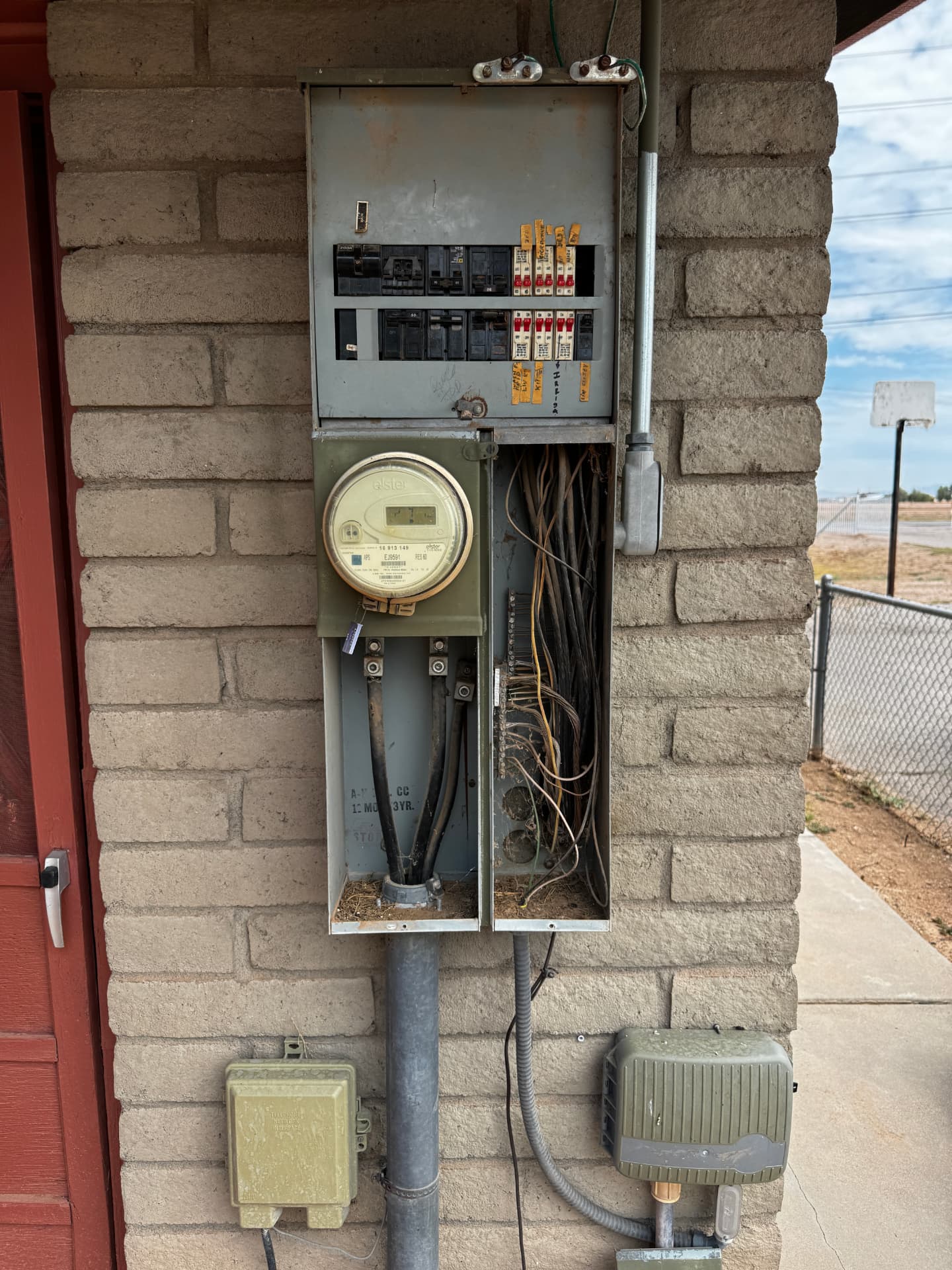
Your electrical panel is the single point where power from the utility company enters your home and gets distributed to every outlet, light, and appliance you own. Most homeowners never think about it until something forces the issue, a breaker that won't stop tripping, a renovation that needs more capacity, or a home inspector flagging it during a sale.
Here's what actually matters when it comes to deciding whether you need an upgrade, what's involved, and one specific thing worth checking that most general advice skips entirely.
Signs Your Panel Needs an Upgrade
- Breakers trip repeatedly. A breaker tripping once in a while because you ran the microwave and a space heater at the same time is normal. A breaker that trips constantly, especially the same one, usually means that circuit (or your whole panel) is being asked to carry more than it's rated for.
- You're out of room in the panel. If your panel is completely full of breakers and you need to add a circuit for a new appliance, room addition, or EV charger, there may be no physical space left to add one, regardless of whether you have the amperage to spare.
- Your home still has a fuse box, or a panel rated below 100 amps. Older homes, particularly anything built before the 1960s-70s, were often wired for 60-amp service. That was fine for a home with a refrigerator and a few lamps. It is not fine for a home with central air, an electric range, a dryer, multiple TVs, and a home office.
- You're relying on extension cords and power strips as a permanent solution. If you've run out of outlets and have been using power strips and extension cords for months rather than weeks, that's a sign your circuits, not just your outlets, are maxed out.
- Lights flicker or dim when larger appliances kick on. This can indicate your panel or wiring is struggling to deliver consistent power under load.
- You're planning a renovation, addition, or major appliance purchase. Adding a hot tub, an EV charger, a second AC unit, or a finished basement with new circuits often pushes a home's calculated electrical load past what an older 100-amp panel can safely support. Most modern homes are built around 200-amp service for exactly this reason.
- The panel itself shows physical signs of damage. Rust, burn marks, a melted smell, or visible corrosion inside the panel is not a "keep an eye on it" situation. That's a call-someone-now situation.
The One Thing Most Articles Don't Tell You to Check
Most "signs you need an upgrade" lists stop at usage symptoms like tripped breakers and flickering lights. But there's something worth checking regardless of whether your panel is giving you any trouble at all: the brand name on the inside of the panel door.
Two brands in particular, Federal Pacific Electric (FPE), sold under the name "Stab-Lok," and Zinsco, were installed in a large number of homes from the 1950s through the early 1980s, and both have a well-documented history of breakers that fail to trip when they should. In a properly working breaker, an overload or short circuit causes the breaker to trip and cut power before something overheats. Independent testing on FPE Stab-Lok breakers conducted in the early 1980s found failure-to-trip rates as high as 51% in some test runs, and a New Jersey court later ruled that FPE had obtained its safety certification through fraudulent testing practices. Zinsco panels have a separate, equally serious issue: the breakers can corrode and fuse to the bus bar, meaning the breaker may continue conducting electricity even when it's switched to the "off" position.
It's worth being precise here, because this part of the story is often overstated: the U.S. Consumer Product Safety Commission did investigate FPE breakers, and its own contracted testing did find significant failure rates, but the agency ultimately closed the investigation in 1983 without issuing a recall or a formal determination that the breakers posed a serious risk. That's a more measured outcome than a lot of online articles suggest. What's much less ambiguous is what's happened since: independent engineers who worked on the original testing have continued to recommend replacement, and a growing number of homeowners insurance carriers will now deny new coverage, or decline to renew existing policies, when an FPE or Zinsco panel is found during an inspection.
If your panel door has "Federal Pacific Electric," "Stab-Lok," or "Zinsco" stamped or labeled on it, that's worth a call to a licensed electrician regardless of whether you're having any other electrical problems at all.
What the Upgrade Process Actually Involves
A panel upgrade isn't simply unbolting an old box and screwing in a new one. A typical 200-amp panel upgrade involves:
- A load calculation. A licensed electrician calculates your home's actual electrical demand based on square footage, major appliances, and planned additions, to confirm what size service you actually need.
- Utility coordination. Your electrician typically needs to coordinate with your power utility, since the service drop (the wires connecting your home to the grid) and the meter need to be sized to match the new panel.
- Permits. Panel upgrades require an electrical permit in virtually every jurisdiction, along with inspection and approval before the utility will reconnect power.
- The physical swap. Power is disconnected, the old panel and meter socket are removed, the new panel is mounted, wiring is reconnected, and new grounding is installed per current code.
- Inspection and reconnection. A local inspector signs off on the work before the utility restores power.
Most straightforward residential 200-amp panel upgrades are completed in a single day, though you'll be without power for several hours during the swap itself. More complex jobs, especially ones involving rewiring beyond the panel, can take longer.
This is not a do-it-yourself project. Beyond the obvious shock and fire risk of working inside a live panel, an improperly installed panel can fail inspection, void warranties, and in the worst case create exactly the kind of hazard you were trying to eliminate.
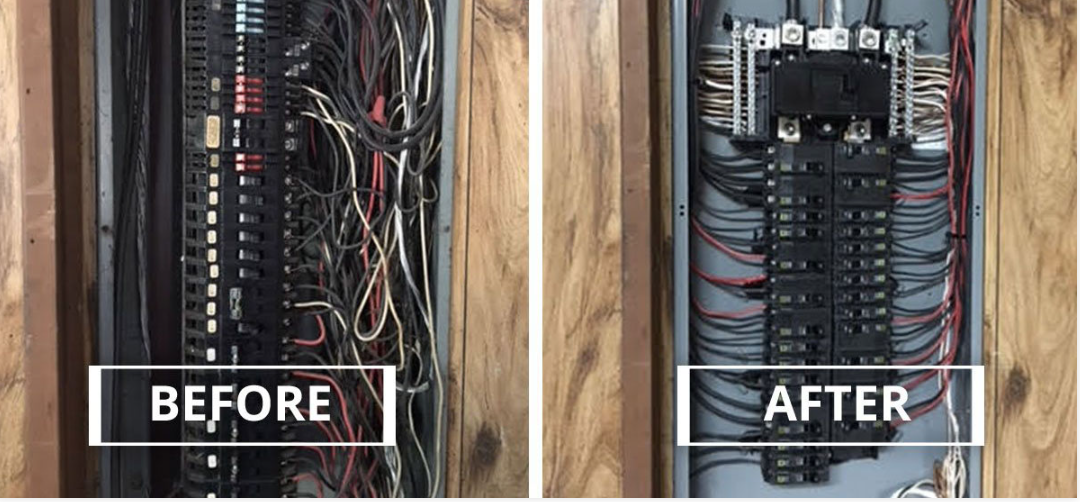
A real panel upgrade: before (left) and after (right).
What It Costs
Pricing varies by region and the complexity of the job, but a straightforward upgrade from 100-amp to 200-amp service, including a new panel, breakers, and meter socket installation, typically falls in the $3,500 to $5,000 range for most homes. Jobs that also require new service wire, a relocated panel, or significant code-related upgrades (like replacing ungrounded outlets or aluminum wiring) will run higher. It's worth noting that the cost difference between installing a 100-amp panel and a 200-amp panel is often relatively small, so if you're upgrading anyway, going to 200 amps is usually the better long-term value rather than a minimal upgrade you may outgrow again in a few years.
A Simple Way to Think About It
If you're dealing with tripped breakers, a maxed-out panel, an old fuse box, or you're planning any project that adds real electrical load to your home, that's a capacity conversation, and a licensed electrician can confirm what size service actually makes sense with a proper load calculation.
If your panel is labeled Federal Pacific, Stab-Lok, or Zinsco, that's a different conversation entirely, and it's worth having regardless of whether anything seems wrong yet.
Frequently Asked Questions
- How do I know what amperage my current panel is?
- Open the panel door and look at the label, or check the largest breaker at the top of the panel, which is usually marked with the total amperage (commonly 60, 100, 150, or 200). If it's unreadable or you're unsure, a licensed electrician can confirm it for you.
- Is 100-amp service really not enough for a modern home?
- It depends on your home's actual electrical load, but 200-amp service is generally considered the standard minimum for a modern home today. A 100-amp panel can still be safe for a smaller home with modest electrical demands, but it leaves very little room for AC systems, EV chargers, hot tubs, or other major additions without exceeding capacity.
- Will I be without power during the upgrade?
- Yes, typically for several hours on the day of the upgrade while the old panel is disconnected and the new one is installed, inspected, and reconnected. Most electricians will coordinate the timing with you in advance.
- Do I need a permit for a panel upgrade?
- Yes. Panel upgrades involve work on your home's main electrical service and require a permit and inspection in virtually every jurisdiction before the utility company will restore power. A licensed electrician will typically handle this coordination for you.
- Can I just replace individual breakers instead of the whole panel if I have an FPE or Zinsco panel?
- This is sometimes suggested as a cheaper fix, but it doesn't address the underlying problem. With FPE panels in particular, the defect isn't limited to the breakers alone, and replacement breakers don't change the fundamental design issues with the panel itself. Most electricians recommend full panel replacement rather than a partial fix in these cases.
- Will upgrading my panel lower my insurance costs?
- It can, particularly if your current panel is a flagged brand like FPE or Zinsco that an insurer has identified as a liability. Replacing a hazardous panel with a modern, code-compliant one is often enough to restore eligibility for coverage that was previously denied or non-renewed, though you'll generally need documentation, like a permit or paid invoice, to show the work was completed.
- Does upgrading my panel increase my home's value?
- It can contribute to it, particularly because outdated or hazardous panels are something home inspectors specifically flag during a sale, and buyers (or their lenders) may require replacement before closing. A modern, properly sized panel removes that friction from a future sale.
- How long does a new panel last before it needs to be replaced again?
- A properly installed, modern panel from a reputable manufacturer can reliably serve a home for 30 years or more with normal maintenance, though some components, depending on type, may need attention sooner.
Ready to Upgrade?
Our licensed electricians handle 200-amp upgrades every day. We manage the permits, the utility coordination, and the install.